What Insurance Should a Backflow Tester Carry
What Insurance Should a Backflow Tester Carry
If you run a backflow testing business, insurance is not a side detail. You are working around pressurized plumbing, customer property, service vehicles, test equipment, and regulated drinking water systems. One broken shutoff valve, one water-damage claim, one road accident, or one dispute over a rejected report can turn into a very expensive week.
That is why the better question is not, "What is the cheapest policy I can get?" It is, "What combination of coverage actually matches the way I do backflow work?"
The public-health backdrop matters here. EPA says the Safe Drinking Water Act protects the nation's public drinking water supply, and utilities enforce that protection through local cross-connection and backflow programs. Seattle Public Utilities, for example, requires annual testing by a certified tester, and Washington's Department of Health publishes tester duties and field-report requirements. In other words, backflow work is not just routine plumbing labor. It sits inside a regulated compliance system.
If you want to understand the customer side of that system first, start with how to choose a qualified backflow tester.
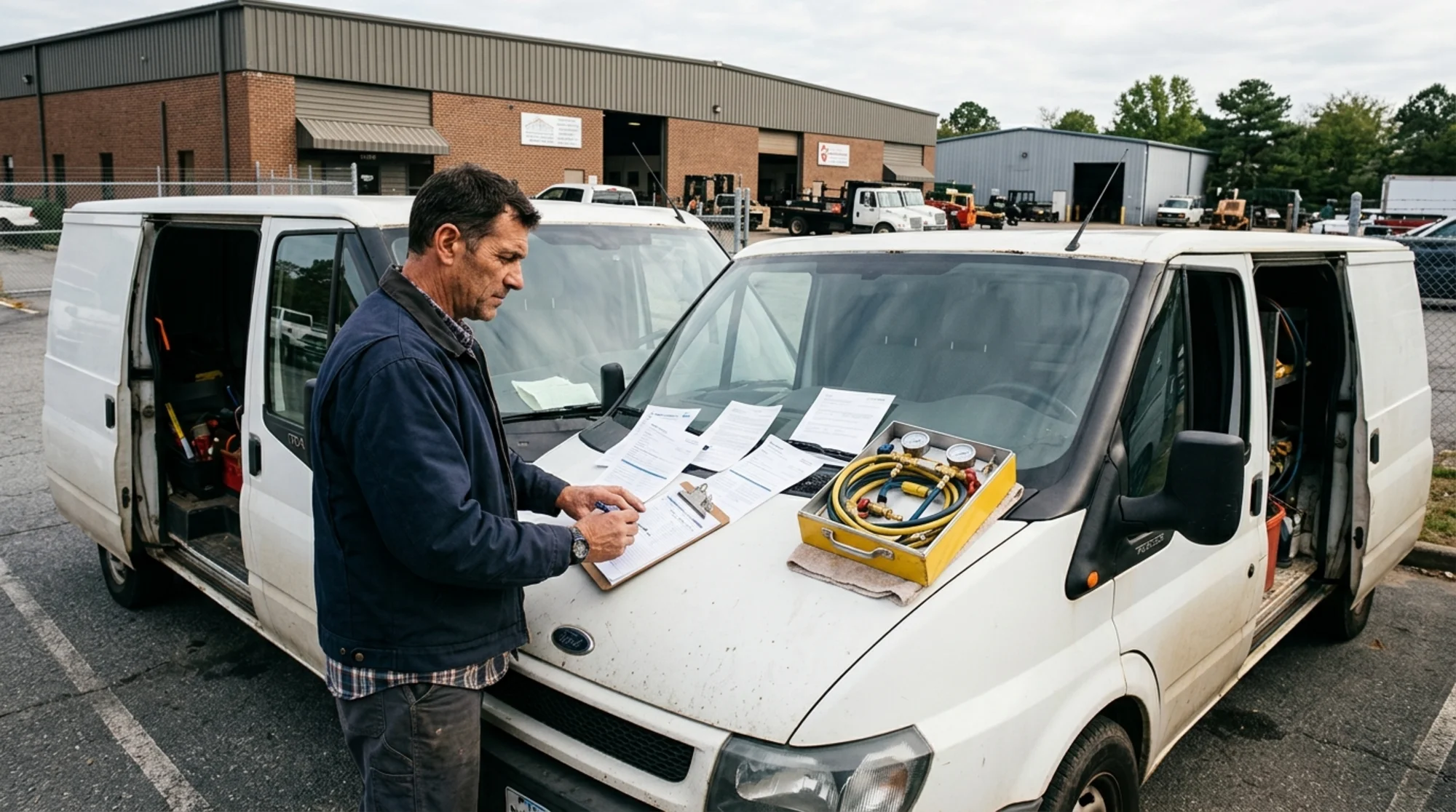
A backflow testing company owner reviewing insurance documents on the hood of a service van with a differential pressure test kit nearby, outdoor commercial property setting, natural daylight, no logos or text
Start with the three coverages most testers need first
For most backflow testers, the starting stack is pretty predictable:
- general liability insurance
- workers' compensation if you have employees
- commercial auto insurance if you use work vehicles
Everything else usually layers on top of those basics.
The Small Business Administration says business insurance protects against the unexpected costs of running a business and notes that some kinds of insurance are required by law. SBA also lists general liability and professional liability among the common business coverages service companies should evaluate. That is a useful baseline because backflow testing companies are service businesses with real field exposure, not desk-only operations.
General liability
This is usually the first policy customers expect you to carry. SBA says general liability protects against financial loss tied to bodily injury, property damage, medical expenses, and lawsuits.
For a backflow tester, that can matter when:
- a valve or fitting leaks during service and damages a wall, floor, or landscape area,
- a customer or tenant trips over hoses, tools, or test equipment,
- water discharge creates a slip hazard,
- or someone claims your crew caused damage while accessing a device.
Washington State gives a concrete example of how this becomes more than a best practice. L&I says contractor registration requires a surety bond and a general liability insurance policy, with minimum limits tied to the registration requirement. That does not mean every state copies Washington exactly, but it shows why many testing companies treat liability coverage as table stakes, not an optional upgrade.
Workers' compensation
If you have employees, this usually stops being optional quickly. SBA says businesses with employees are legally required to carry workers' compensation, unemployment, and disability insurance under the applicable rules.
That matters because backflow work is physical. Techs lift vault lids, kneel in wet areas, work near traffic, handle tools, and move in and out of mechanical rooms and utility spaces. Even a small company with one field technician has real injury exposure.
If you are a solo operator with no employees, the answer may be different, but that is a place to confirm with your state rules and insurance advisor instead of guessing.
Commercial auto
A lot of small testers forget this one until there is a claim. Personal auto coverage is not the same thing as commercial auto coverage for a service business.
If you drive to properties with gauges, rebuild kits, paperwork, and tools, your vehicle is part of the business operation. That creates exposure from:
- at-fault crashes,
- vehicle theft,
- damaged equipment in transit,
- and liability while crews are driving between jobs.
If your business runs one van today and hopes to add routes later, commercial auto is usually part of becoming a real company instead of just a side hustle.
The next layer depends on how you sell and how you work
Once the core three are in place, the next question is what kind of jobs you take and what promises you make to customers.
 A backflow testing business owner at a desk reviewing a certificate of insurance, contractor registration papers, and a field test report beside a calibrated differential pressure gauge, natural indoor lighting, no visible logos or text overlay
Professional liability can make sense for report-driven businesses
SBA says professional liability insurance protects service businesses against financial loss from malpractice, errors, and negligence. For backflow testers, that usually translates into paperwork and judgment risk, not just pipe-and-water risk.
Examples include:
- a report is completed incorrectly,
- the wrong assembly information is submitted,
- a customer claims your advice caused a compliance problem,
- or a missed detail leads to a rejected utility submission and downstream cost.
Not every solo tester buys professional liability on day one. But if your business works with commercial accounts, HOAs, property managers, schools, or fire-line-adjacent coordination, the paperwork risk gets a lot more expensive.
This is also one of those areas where your marketing changes your exposure. If you position yourself as the company that handles compliance end to end, customers may assume you are taking responsibility for more than the physical test itself. That can be good for sales, but it also means your insurance should match the promise.
Tools and equipment coverage is worth reviewing
A backflow tester without a calibrated differential pressure test kit is not really operational. If your gauge kit is stolen from a truck, damaged in transit, or ruined on site, you may lose both revenue and scheduled jobs.
That is why many providers also look at:
- commercial property coverage for stored equipment,
- inland marine or tools-and-equipment coverage for gear that travels,
- and sometimes a business owner's policy if bundling makes sense.
SBA specifically notes that commercial property insurance protects business property and physical assets from a range of loss events. For a backflow company, that can include test kits, laptops, printers, stocked repair parts, and jobsite tools.
Do not forget bond requirements and state registration rules
Insurance and bonding are not the same thing, but backflow testers often need to think about both together.
Washington L&I says contractor registration requires a surety bond or assignment of savings plus general liability insurance. TCEQ, on the other hand, focuses heavily on occupational licensing. Texas says a person who tests or repairs the installation or operation of backflow prevention assemblies must hold a TCEQ-issued license, with special limits around fire-line work.
That combination is the real lesson. Your insurance stack often depends on both of these questions:
- What does my state require to operate legally?
- What do my customers, utilities, GCs, or property managers require before they let me on site?
So if you serve markets like Seattle, Austin, or Philadelphia, do not assume the business setup is interchangeable just because the technical test procedure feels similar.
Higher-limit and umbrella coverage becomes more important as accounts get bigger
A company working mostly on single-family irrigation devices may carry a different risk profile than one handling commercial campuses, multi-property portfolios, or large managed accounts.
The more your business shifts toward:
- HOAs and condo associations,
- commercial properties,
- schools and hospitality,
- or accounts that require certificates of insurance before access,
the more often you will run into higher minimum limits, additional insured requests, and umbrella-policy conversations.
This is not because backflow testing is uniquely glamorous. It is because larger customers usually have formal vendor-risk requirements. If you want those accounts, your insurance program has to look credible to procurement, not just to you.
If that is the direction you are moving, our guides on backflow testing requirements for commercial properties and backflow prevention for HOAs and condo associations help show the kinds of clients and compliance environments you may be stepping into.
 A small backflow testing company team loading test equipment into a service van while a manager reviews a coverage checklist and customer vendor requirements on a clipboard, natural lighting, no logos or text
A practical minimum checklist for backflow testers
If you want the plain-English version, most backflow testing businesses should review this checklist with an agent who understands contractor or field-service risk:
- General liability for bodily injury and property damage claims.
- Workers' compensation if you have employees.
- Commercial auto for service vans and job travel.
- Professional liability / E&O if you want protection against report, advice, or compliance-related claims.
- Tools and equipment or inland marine coverage for gauges and field gear.
- A bond or contractor registration package if your state or contract requires it.
- Umbrella coverage if you are chasing larger commercial or institutional work.
That is not a universal legal prescription. It is the practical stack most serious operators end up reviewing.
What to ask your insurance agent before you renew
A useful renewal conversation is usually more specific than, "Can you lower my premium?"
Ask questions like:
- Do my policies clearly cover backflow testing and related repair work?
- Is my vehicle use classified correctly for field service?
- Are my test kits and tools covered while in transit?
- Do I have enough liability limit for commercial and HOA accounts?
- If I subcontract or add technicians, what changes?
- Do I need a certificate of insurance format for property managers or utilities?
That last point matters more than many small operators expect. Good insurance is not just about surviving claims. It also helps you win better accounts faster because you can send a clean COI when asked.
If you are trying to improve how your company looks to customers, compare this with what owners are told to verify in how to choose a qualified backflow tester, and keep your credentials easy to produce. For quick baseline questions from customers, our FAQs page is still useful.
Bottom line
The right insurance stack for a backflow tester usually starts with general liability, workers' comp if you have employees, and commercial auto. From there, professional liability, tools-and-equipment coverage, bond requirements, and umbrella limits depend on the size of your accounts and the rules in your market.
The mistake is looking for one universal policy and calling it done. Backflow testing lives at the intersection of field service, regulated water work, customer property, and compliance paperwork. Your insurance should reflect that reality.
If you want to grow your company and put that professionalism to work, visit For Providers or claim your listing on FindBackflowTesters.
Sources
This article references guidance and regulations from authoritative sources including:
- U.S. Environmental Protection Agency - Overview of the Safe Drinking Water Act
- American Water Works Association - Cross-Connection Control and Backflow Prevention resources
- U.S. Small Business Administration - Get business insurance
- Washington State Department of Labor & Industries - Register as a contractor
- Texas Commission on Environmental Quality - Backflow Prevention Assembly Tester Information and Requirements
- Washington State Department of Health - Cross-Connection Control and Backflow Prevention
- Seattle Public Utilities - Backflow Assembly Testing
- Centers for Disease Control and Prevention - Preventing Drinking Water-Related Illnesses
Last updated: May 1, 2026