How to Choose a Qualified Backflow Tester: What to Look For
How to Choose a Qualified Backflow Tester: What to Look For
If you've received a notice that your backflow preventer needs testing, the next step is finding someone qualified to do it. That part sounds simple, search online, pick a name, schedule the visit. But not every tester who shows up with a set of gauges can actually satisfy your local program's requirements.
Choosing the wrong tester can mean a rejected report, a missed compliance deadline, or a report that your water utility will not accept. Worse, it can mean your backflow assembly is not actually being verified the way the program expects. This guide walks you through what to look for, what to ask, and how to avoid common mistakes when hiring a backflow tester.
If you're still getting up to speed on why backflow testing is required, start there for the public health background behind these annual requirements.
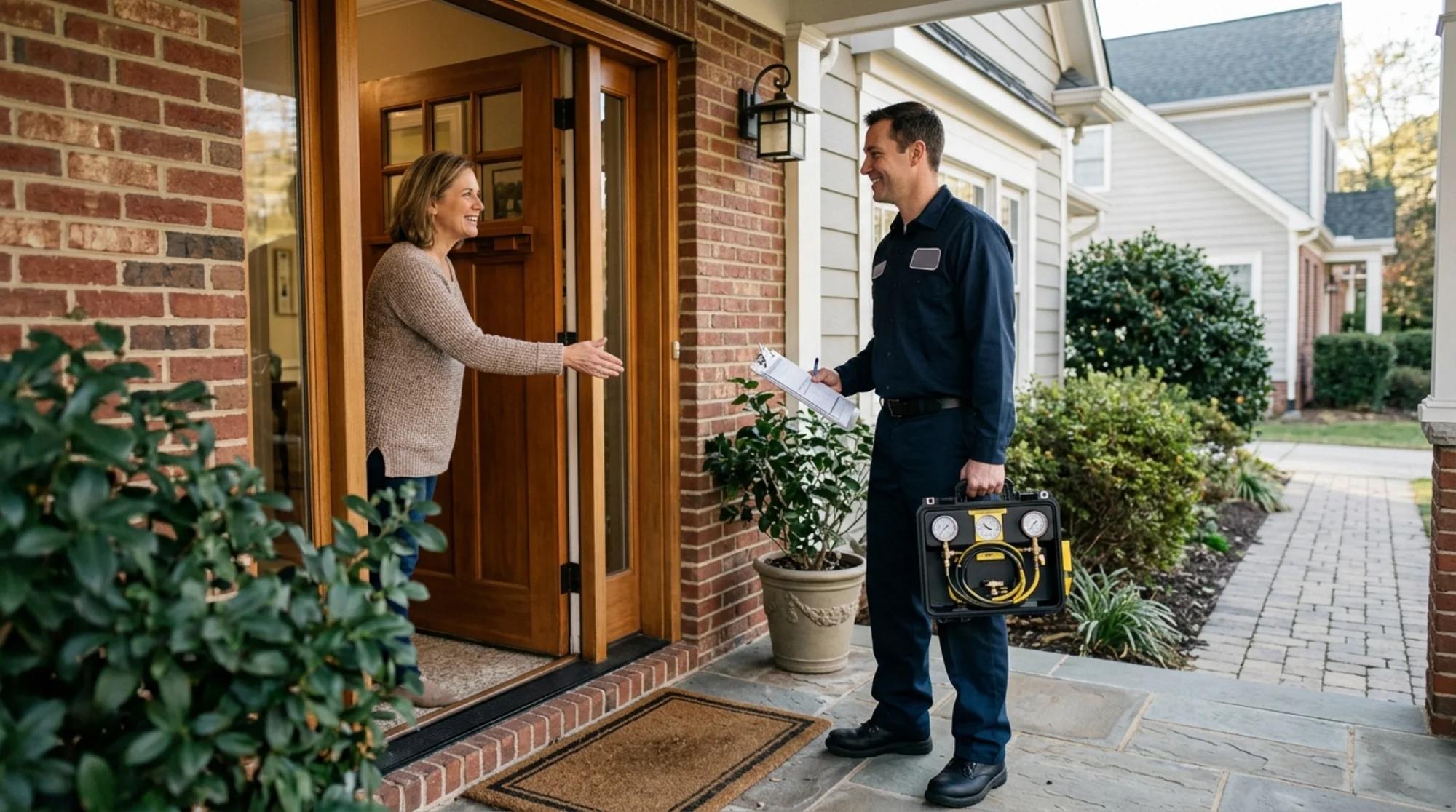
Realistic photo of a homeowner at the front door greeting a uniformed backflow tester carrying a differential pressure test kit and clipboard, natural daylight, residential setting, no logos or text
What a backflow tester actually does
A qualified backflow tester does more than run water through your assembly. They connect a calibrated differential pressure gauge to the test cocks on your backflow preventer and systematically check whether each internal valve is holding within acceptable parameters. They verify that check valves seat properly, that relief valves open when they should, and that the assembly as a whole is preventing backflow as designed.
After completing the physical test, the tester records the results on a standardized field test report. In many jurisdictions, that report then has to be submitted to your water utility or local cross-connection control program. The tester's certification or license number, gauge serial number, and calibration date are often part of that paperwork.
Seattle Public Utilities is unusually direct about this. It says annual testing is the only way to ensure assemblies are functioning properly, that testing must be performed by a State of Washington Certified Backflow Assembly Tester, and that test reports cannot be submitted unless the tester's certification and test equipment calibration information are already in the system. That kind of requirement is not a Seattle-only oddity. It is a good example of why the tester's paperwork and qualifications matter just as much as showing up with gauges.
Verify certification or licensing, and do not assume the rules are national
This is the most important step, and also the one where property owners most often make bad assumptions. There is no single national credential that automatically qualifies a person to test backflow assemblies everywhere. Requirements vary by state, and sometimes by city or utility district.
In Texas, for example, the Texas Commission on Environmental Quality says a person who repairs or tests the installation or operation of backflow prevention assemblies must hold a TCEQ license. That license has training, exam, and continuing education requirements. So if you're hiring a tester in Austin, you should be confirming that they hold the required Texas credential, not just taking their word that they are experienced.
Washington handles this differently. The Washington Department of Health publishes Backflow Assembly Tester duties, field test report content requirements, certification verification resources, and a BAT public list. That gives owners and utilities a concrete way to confirm whether a tester is currently recognized by the state program.
Philadelphia adds another variation. The Philadelphia Water Department publishes city-certified technician resources and city-approved assembly information. That means the right question is not only "Are you certified?" but also "Are you recognized for the kind of work my local program requires?"
So before you hire anyone, find out what your own program expects and confirm the tester matches it. Our FAQs, the Austin Water backflow testing program, and the Philadelphia Water Department backflow testing program are useful starting points if you need local context.
 Realistic close-up photo of a certified backflow tester connecting a calibrated differential pressure gauge kit to an outdoor RPZ assembly, hands and test cocks visible, natural lighting, no brand names or text overlay
Gauge calibration is not optional
A backflow test is only as reliable as the gauge used to perform it. Differential pressure test kits need regular calibration, and many programs expect current calibration information to appear on the report or in the utility's system.
If a tester cannot tell you when their gauge was last calibrated, or cannot provide that documentation when asked, that is a serious red flag. A rejected report because of bad or missing calibration information is not just an administrative annoyance. It can leave you still out of compliance after you already paid for a service visit.
You do not need to become a technical expert here. Just ask the plain question: Is your test kit currently calibrated, and will that information appear on my report? A professional tester should answer quickly and clearly.
Local program knowledge matters more than most owners realize
A tester can be mechanically competent and still create a headache if they do not understand the local submission process.
A good tester should know things like:
- which utility or cross-connection office receives the report,
- whether the report is submitted by the tester or the property owner,
- whether digital uploads, specific PDFs, or utility-specific forms are required,
- whether there are separate procedures for domestic, irrigation, or fire-line assemblies,
- and what usually happens if an assembly fails and needs repair or retesting.
Philadelphia's program shows why this matters. It publishes approved assemblies, technician resources, installation forms, and official test and maintenance records. A tester who works there regularly should not sound fuzzy about where the paperwork goes.
This is especially important if you manage multiple properties, an HOA, or commercial sites. The larger the property, the more likely the compliance process is bigger than one quick field visit. If you want to understand the utility side better, our guide on how utilities track backflow test compliance fills in that part of the picture.
Ask whether they can repair and retest if the assembly fails
Backflow assemblies fail tests all the time, especially older ones or units that have not been serviced in a while. When that happens, the job often turns into repair plus retest, not just a one-and-done inspection.
Some testers can handle both parts. Others only perform the test, then send you to a separate plumber or repair specialist before returning later to retest. That can mean more cost, more scheduling, and more time with an open compliance issue.
Before you book, ask:
- If my assembly fails, can you repair it or coordinate the repair?
- Can you retest after the repair, and how quickly?
- Do you normally carry common rebuild parts for the kinds of assemblies you test?
The best answer will depend on your market. Some owners want a dedicated testing specialist. Others want one company that can test, repair, retest, and close the paperwork loop. Either can be fine, as long as responsibilities are clear up front.
Insurance, communication, and recordkeeping are part of professionalism too
Backflow testing involves shutting off water, connecting to pressurized plumbing, and sometimes opening up assemblies for repair. So basic professionalism matters.
Ask whether the tester carries general liability insurance. A reputable company should not act offended by the question.
Also pay attention to how they communicate before the appointment:
- Do they explain whether water will be interrupted?
- Do they tell you what access they need?
- Do they explain whether they or you will submit the report?
- Do they promise a copy of the completed report for your records?
That last point matters more than people think. Good recordkeeping helps if your utility later says it never received the test, if you sell the property, or if you need to prove what work was performed. If you have not been through this process before, our post on how to prepare your property for a backflow test covers the appointment side in more detail.
 Documentary-style realistic photo of a property manager reviewing a completed backflow test report with organized folders and a clipboard beside a labeled assembly record binder, natural office lighting, no text overlay
Red flags that should make you slow down
Not every warning sign is dramatic. Sometimes it is just a pattern of vague or slippery answers.
Watch for things like:
- They cannot provide a certification or license number.
- They sound unsure about your utility's submission process.
- They cannot confirm current gauge calibration.
- They will not provide a copy of the completed report.
- Their price is much lower than everyone else, but the scope is vague.
- They dodge basic questions about repairs, retests, or insurance.
That last point about price is worth emphasizing. The cheapest option is not always the safest option if it does not include the documentation, local-program knowledge, or follow-through your property actually needs.
A quick checklist before you book
Use this as a practical screen before hiring anyone:
- Are they certified or licensed for your state or local program where required?
- Can you verify that credential through a public database, utility list, or direct documentation?
- Is their gauge currently calibrated?
- Do they understand your local utility's report process?
- Can they explain who submits the report and when?
- Can they handle or coordinate repair and retest if the assembly fails?
- Do they carry liability insurance?
- Will they provide you with a completed report for your records?
If you are comparing provider options in different markets, it can help to browse city pages like Austin, Texas and Charlotte, North Carolina so you can start with companies that already work in your area.
Bottom line
Choosing a qualified backflow tester is not just about finding someone available next Tuesday. It is about finding someone whose credentials, calibration, local-program knowledge, and paperwork habits actually match what your utility expects.
The right tester makes the process boring in the best possible way. The test gets done correctly, the report gets handled properly, and you are not left wondering whether your property is still out of compliance.
If you are ready to move forward, find a tester near you and start with someone who can clearly explain their credentials, their process, and how they handle the reporting side from start to finish.
Sources
This article references guidance and regulations from authoritative sources including:
- U.S. Environmental Protection Agency - Safe Drinking Water Act Overview
- Washington State Department of Health - Cross-Connection Control and Backflow Prevention
- Seattle Public Utilities - Backflow Assembly Testing
- Philadelphia Water Department - Cross-Connection & Backflow Compliance
- Texas Commission on Environmental Quality - Backflow Prevention Assembly Tester Information and Requirements
- Centers for Disease Control and Prevention - Preventing Drinking Water-Related Illnesses
- American Water Works Association - Cross-Connection Control and Backflow Prevention Resources
Last updated: April 27, 2026