Red Flags When Hiring a Backflow Testing Service
Red Flags When Hiring a Backflow Testing Service
Most property owners only think about backflow testing when a notice shows up from their water utility or when someone tells them their annual test is due. At that point, the goal is simple: find a company, get the test done, stay in compliance.
But not every company that offers backflow testing operates with the same level of care, clarity, or competence. Some are excellent. Some are fine. And a few will leave you with missing paperwork, unnecessary repairs, or a report that was never actually submitted.
This article is not a general guide to choosing a qualified tester. If you want that, start with how to choose a qualified backflow tester. This piece is specifically about what should make you pause during the screening process, and what to do if something already went wrong.
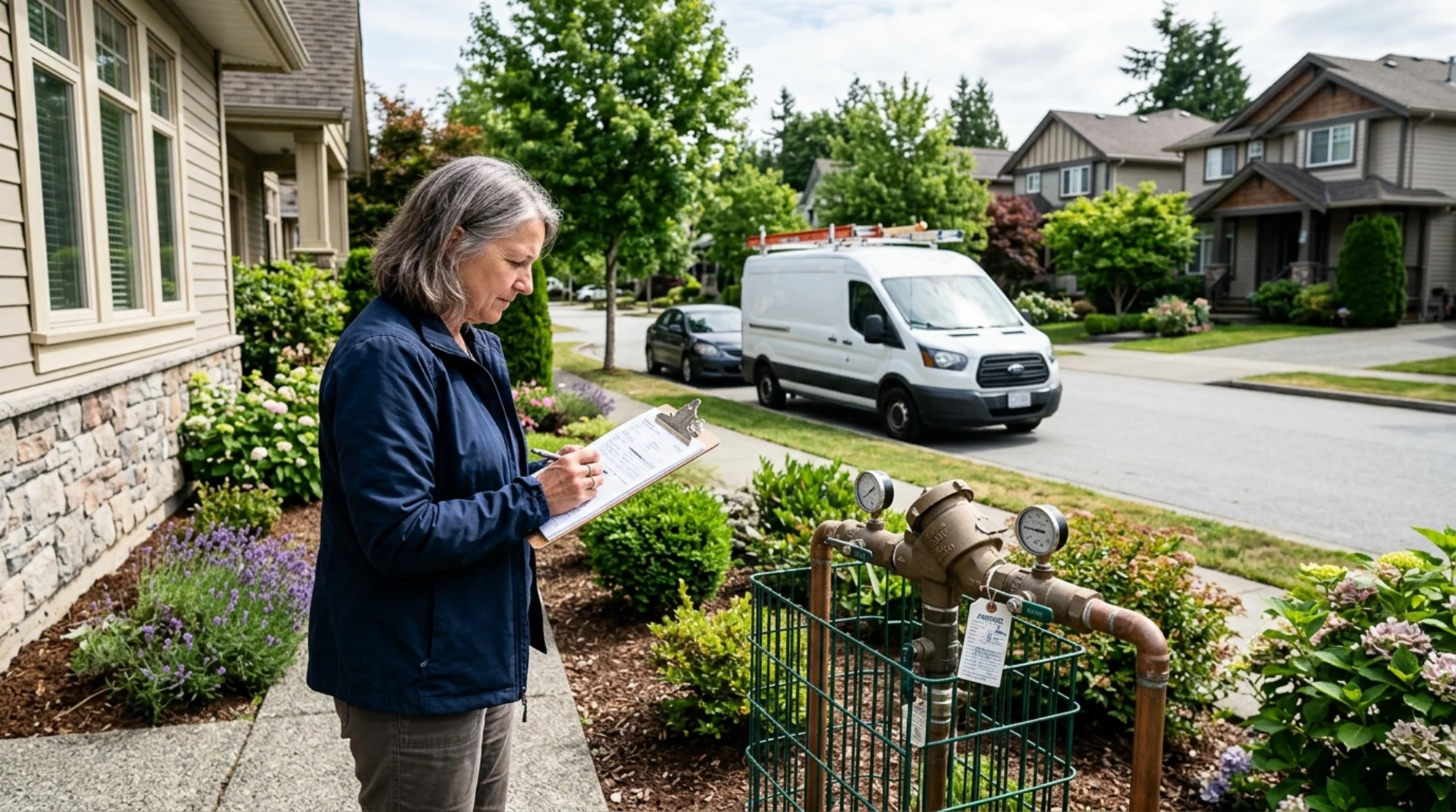
A homeowner standing near an outdoor backflow prevention assembly looking at paperwork on a clipboard, with a service van parked in the background on a residential street, natural daylight, no text overlays or logos
Why screening matters more than you might think
Backflow prevention assemblies protect the public drinking water supply. That is the core reason they exist, and it is why utilities and local programs require periodic testing. The EPA's Safe Drinking Water Act establishes the federal framework for protecting public drinking water, and local utilities build their cross-connection control programs on top of that foundation. For more on why testing is required, see why backflow testing is required.
When a test is done poorly, skipped, or reported incorrectly, the consequence is not just a failed inspection. It can mean your property falls out of compliance, your water service is flagged, or an actual cross-connection hazard goes undetected. The CDC notes that harmful germs and chemicals can get into drinking water at the source or while water is piped to homes and businesses, which is exactly the kind of risk backflow prevention is designed to address.
So the person you hire is not just checking a box. They are performing a public health function. That is worth a few extra questions before you hand over the job.
Red flags to watch for
Not every concern below means a company is dishonest. Some are signs of disorganization. Others suggest the company is not equipped for your specific situation. Either way, they are worth noticing.
They cannot explain whether the tester is licensed or certified
Licensing and certification requirements vary by state and sometimes by local jurisdiction. In Texas, the Texas Commission on Environmental Quality requires anyone who tests or repairs backflow prevention assemblies to hold a TCEQ-issued license. In Washington, all assemblies must be tested by a State of Washington Certified Backflow Assembly Tester, and the state provides a public list for verification.
A reliable company should be able to tell you clearly what credential their tester holds and whether it meets local requirements. If the person answering the phone cannot explain that, or brushes off the question, that is worth noting. You can check credentials yourself in many states, and the fact that a company discourages you from doing so is its own kind of answer.
They are vague about who actually performs the test
Some companies dispatch subcontractors, while others have in-house testers. Neither approach is inherently better or worse. But you should be able to find out who is actually showing up, what their qualifications are, and whether the company stands behind their work. If the answer is "we'll send someone" with no further detail, slow down.
They promise to "handle everything" but cannot explain how
A company that says it will take care of the report, the utility submission, and any follow-up is offering a real convenience. But if they cannot explain how results are submitted to your specific water utility or program, that promise does not mean much.
Programs differ. In Philadelphia, the Water Department maintains specific resources for test and maintenance records, and distinguishes between domestic and fire sprinkler technician requirements. In Austin, submission and compliance tracking follow Austin Water's process. Seattle Public Utilities expects testers to submit reports and certification documents correctly, and advises owners to make sure they receive documentation confirming that results were submitted.
A trustworthy company should be able to describe their submission process for your area without guessing.
 A certified backflow tester's hands attaching a differential pressure gauge to a reduced pressure zone assembly outdoors, with test kit and hoses visible on the ground, natural lighting
They cannot describe the assembly type or location they plan to test
Backflow assemblies are not interchangeable. As the Portland Water Bureau explains, different assembly types apply to different hazard levels and locations. Irrigation systems commonly use DCVA or PVBA assemblies. Commercial properties may have premises isolation assemblies, detector assemblies, or RPBA installations. Fire-line assemblies have their own requirements and, in some states, additional licensing restrictions.
If the company scheduling your test cannot tell you what kind of assembly you have, or does not ask where it is located on the property, that is a gap. A tester who shows up expecting a domestic assembly and finds a fire-line detector check is not necessarily prepared for both.
They push immediate replacement without clear findings
Backflow assemblies do fail, and they do need replacement sometimes. But that recommendation should come after a documented test with clear findings, not before. If a company tells you the assembly needs to be replaced without performing a field test first, or without explaining what specific check or component failed, that is a reason to get a second opinion.
The same applies to high-pressure repair quotes that appear before anyone has confirmed what is actually wrong. A failed test should produce a report with specific results. Ask to see it.
Their quote is unclear about what you are paying for
Testing, repair, replacement, and retesting are different services. A quote that lumps them all together without breaking out costs, or one that does not distinguish between the initial test and a retest after repair, makes it hard to evaluate whether the price is fair.
Low price alone is not a red flag. Seattle Public Utilities specifically advises owners to contact several testers to find one that fits pricing and scheduling needs. But a quote should be clear enough that you know what is included and what would trigger additional charges.
They discourage questions or refuse to provide basic records
You are allowed to ask questions. You are allowed to request a copy of the test report, a confirmation of submission, and a receipt for work performed. A company that resists those requests, or acts like they are unusual, is telling you something about how they operate.
They create urgency without a real deadline
Some owners do receive legitimate compliance notices with real deadlines. If your water utility sent you a notice, that urgency may be real. But if a company contacts you out of the blue and insists you need immediate service or face penalties, ask for specifics. What utility issued the notice? What is the actual deadline? Can they provide the notice number or reference?
False urgency is a common pressure tactic. If you are concerned about your water safety or notice a change, the CDC recommends contacting your health department or utility directly rather than relying on a vendor's claim.
What to ask for before and after service
You do not need to become an expert in cross-connection control to screen a testing company. But a short checklist helps.
Before the test
- Ask for the tester's name and certification or license number
- Ask how the report will be submitted to your utility or local program
- Ask what assemblies they expect to test and where they are located on your property
- Ask whether the quote covers testing only, or includes repair and retest if needed
- Ask whether they carry insurance appropriate for the work
After the test
- Request a copy of the completed field test report with specific results for each assembly
- Confirm that the report was submitted to the appropriate utility or program
- Keep a record of the tester's name, certification number, and the date of service
- If any repair or replacement was recommended, ask for the specific test findings that support it
For answers to common questions about the testing process, visit our FAQ page.
 A neatly organized backflow test kit open on the ground next to a residential backflow assembly, showing calibrated gauges, hoses, and fittings, daylight, no logos
What to do if you already hired the wrong company
If you have already had a test performed and you are not sure whether it was done correctly or whether the report was submitted, start with your water utility. Most utilities can confirm whether a valid test report is on file for your property. If no report exists, or if the report was submitted incorrectly, the utility can usually tell you what needs to happen next.
If you suspect the tester was not properly certified, check with the licensing authority in your state. In Texas, you can verify BPAT licenses through TCEQ. In Washington, the Department of Health provides BAT certification verification. Your utility's cross-connection control office may also be able to confirm whether the tester is recognized in their system.
You are not locked in. A second company can retest the assembly and submit a correct report. If you are in an area like Austin or Charlotte, FindBackflowTesters can help you locate qualified providers who serve your specific program.
The bottom line
Most backflow testing companies do honest, competent work. The red flags in this article are not meant to make you suspicious of everyone. They are meant to help you recognize the small number of situations where something is off, so you can ask the right questions before it becomes a bigger problem.
The best protection is simple: ask clear questions, request documentation, and verify that the report actually reached your utility. That is the difference between being in compliance and just hoping you are.
Sources
This article references guidance and regulations from authoritative sources including:
- U.S. Environmental Protection Agency - Safe Drinking Water Act Overview
- Centers for Disease Control and Prevention - Drinking Water
- American Water Works Association - Cross-Connection Control / Backflow Prevention
- Seattle Public Utilities - Backflow Testing
- Washington State Department of Health - Cross-Connection Control / Backflow Prevention
- Philadelphia Water Department - Backflow Compliance
- Texas Commission on Environmental Quality - BPAT Licensing
- Portland Water Bureau - Backflow Assemblies
Last updated: April 29, 2026