What Certifications Should a Backflow Tester Have?
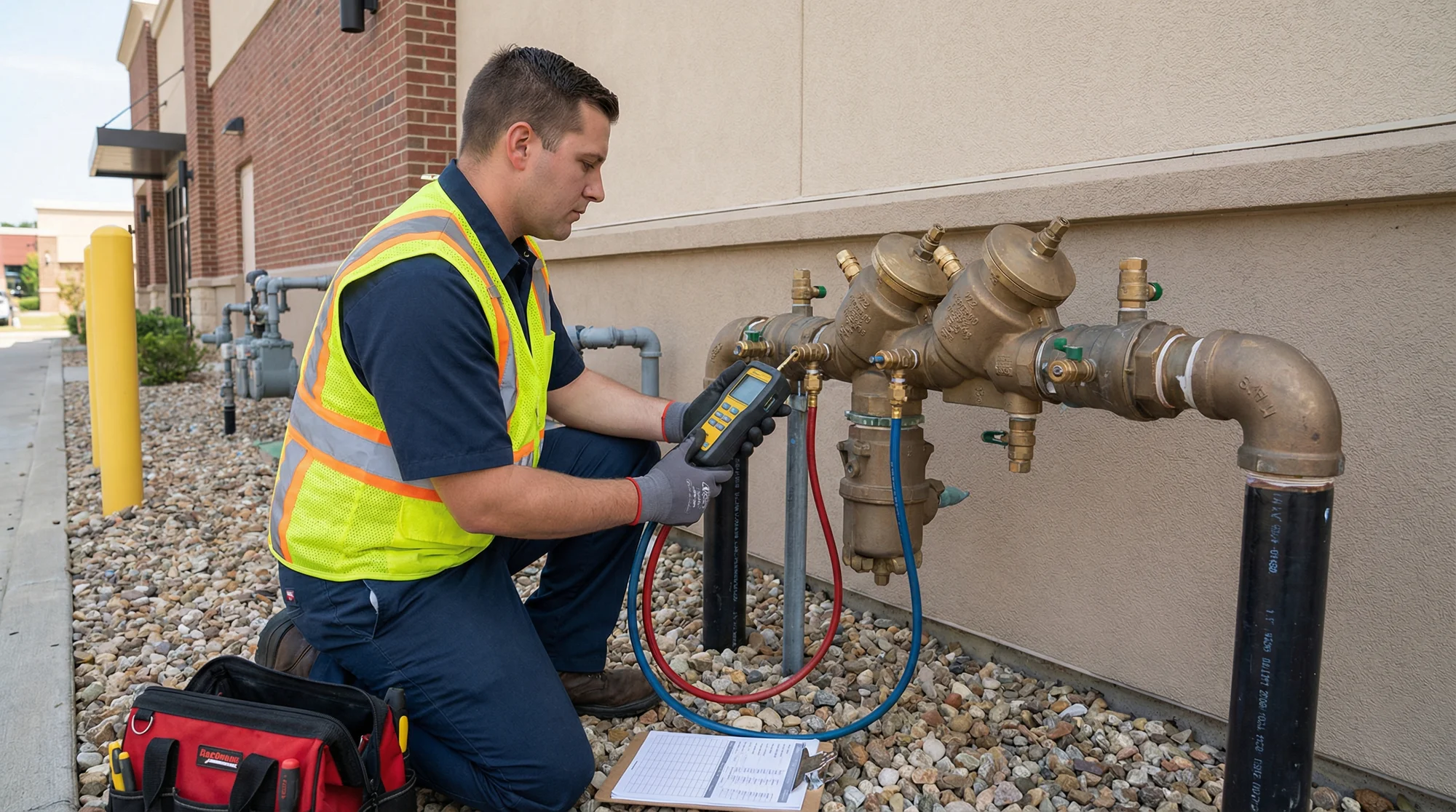
If you are hiring someone to handle an annual backflow test, one of the easiest mistakes to make is assuming any plumber or irrigation contractor can do it. In many places, that is not how the rules work. Backflow testing is often tied to specific tester certifications, approved courses, practical exams, renewal cycles, and local utility or county requirements.
That means the best question is not just, "Are you licensed?" It is, "What certifications do you hold for backflow testing in my area, and are they current?"
The right backflow tester should be able to show current testing credentials, use calibrated equipment, and submit paperwork that your utility can actually accept.
The Short Answer
A qualified backflow tester usually needs current tester-specific certification, not just general plumbing experience. The exact credential depends on the state, county, or utility program. In some jurisdictions, the tester also needs to appear on an approved list or hold related contractor credentials to work for a fee.
A few real examples show how much this varies:
- Texas (TCEQ) requires a Backflow Prevention Assembly Tester license for people who test or repair assemblies
- Minnesota requires proof of current ASSE 5110 certification for backflow prevention tester certification
- Oregon requires successful completion of an approved tester course and may also require contractor licensing for public listing or paid work
- Los Angeles County requires current county certification for individuals who test, repair, or install testable assemblies in the county
So if a provider cannot clearly explain which credential they hold and who recognizes it, that is a warning sign.
Why Certification Matters
Backflow testing is not just a mechanical check. It is part of a public drinking water protection process. Your utility or local authority is relying on the tester to inspect the device correctly, record the right readings, and submit a report that can stand up if the property is audited later.
That is why certification usually covers more than theory. It often involves:
- Classroom instruction or approved coursework
- Hands-on practical testing skills
- Written or practical exams
- Renewal or continuing education
- Rules for documentation and report submission
If you want the compliance background, our guide on why backflow testing is required explains why utilities treat these devices as a drinking water protection issue rather than a routine plumbing courtesy.
Common Credentials You May See
State-issued tester licenses
Some states regulate backflow testers directly. For example, the Texas Commission on Environmental Quality says a person who repairs or tests the installation or operation of backflow prevention assemblies must hold a TCEQ-issued license. Texas also ties that license to education, experience, an approved 40-hour course, and continuing education for renewal.
ASSE-linked certification
In some states, a national professional standard is part of the requirement. Minnesota says anyone applying for a new or renewing a backflow prevention tester certification must provide proof of current ASSE 5110 certification. That matters because it gives you something concrete to ask for when screening providers.
Approved course plus local or contractor requirements
Oregon is a good example of a layered system. The Oregon Health Authority requires successful completion of an approved Backflow Assembly Tester course, and it notes that a Construction Contractors Board or Landscape Contractors Board license may be required if the person is testing for a fee. A CCB or LCB license is also required to be on the state’s public list of backflow testers.
County or utility-specific approval
Some programs go further than the state. Los Angeles County says any individual who tests, repairs, or installs testable backflow prevention assemblies within the county must possess a current county certification. In those places, a provider may have valid experience and still not meet the local approval requirement if the local credential is missing.
What to Ask Before You Hire
You do not need to turn into a regulator to check this. A few practical questions are enough:
- What backflow tester certification do you currently hold?
- Is that certification accepted by my city, county, or water utility?
- When does it expire?
- Do you submit reports directly, or do I need to send them in?
- Have you tested this type of assembly before — RPZ, DCVA, or PVB?
- If the assembly fails, can you repair it and provide a re-test, or will I need a separate contractor?
A legitimate provider should not get defensive about those questions. They should be able to answer them quickly and back them up with documentation.
Documents a Good Tester Should Be Able to Show
At minimum, you should expect some combination of the following:
- Current tester certification card or license
- Local approval or utility-recognized status where required
- Business license or contractor license if that jurisdiction requires one for paid work
- Gauge calibration information or current testing equipment records
- Sample report format or proof they know your utility’s submission process
That last item matters more than people think. A technically capable tester who submits incomplete paperwork can still leave you marked overdue in the utility system. If you have ever wondered why notices keep coming after a test was completed, our article on how utilities track backflow test compliance explains where that disconnect happens.
 Credentials matter, but so do the basics: calibrated equipment, complete report data, and a process the utility will recognize.
Does a Plumber License Automatically Qualify Someone?
Not always. That is one of the biggest points of confusion.
Some backflow work intersects with plumbing, irrigation, or fire protection, but the annual testing credential is often separate. Minnesota explicitly notes that a plumber license is not required to obtain a tester certification, while still requiring current ASSE 5110 certification for tester status. Texas, on the other hand, has its own tester licensing path through TCEQ.
So the right framing is this: a plumbing license may be useful, and in some cases necessary for certain repairs, but it does not automatically mean the person has the tester credential your compliance program expects.
Why Local Acceptance Matters as Much as the Credential
Even when a certification is real, you still want to know whether it is accepted in your program. Utilities and counties can have their own approved lists, local forms, submission portals, or recognition rules.
That is why it helps to compare your provider’s answer against your local program page. If you are in a utility-managed program, start with your city or utility requirement page and then confirm the provider matches what that program expects. Our pages for Austin, Charlotte, and utility program resources like Austin Water and Charlotte Water can help you orient yourself before you book the appointment.
Red Flags to Watch For
Be careful if a provider:
- Cannot name the certification they hold
- Says "I’m a plumber, so that covers it" without anything more specific
- Will not provide an expiration date or copy of the credential
- Does not know whether your utility requires direct report submission
- Avoids answering whether they test your assembly type regularly
- Promises compliance without asking which utility or jurisdiction governs your property
Those are the providers most likely to create paperwork problems later.
What Property Owners Should Do Next
If you are hiring for annual testing, keep the screening process simple:
- Ask for the exact tester credential
- Confirm it is current
- Confirm it is accepted in your area
- Confirm they can test your specific assembly type
- Confirm how the report gets submitted
If you manage multiple sites, build a small vendor checklist and use it every time. That will save you from re-learning the same lesson every year. Our guide on how to choose the right provider is a good companion if you are comparing several companies.
The Bottom Line
The right backflow tester should have more than general plumbing familiarity. They should have current, verifiable backflow testing credentials that match your jurisdiction’s rules, plus the equipment and paperwork discipline to get your annual report accepted the first time.
Because requirements vary, there is no single universal badge that covers every location. But there is a universal rule of thumb: if the provider cannot clearly show what certification they hold, when it expires, and whether your program accepts it, keep looking.
Sources
This article references guidance and regulations from authoritative sources including:
- Texas Commission on Environmental Quality (TCEQ) - Occupational Licenses: Backflow Prevention Assembly Tester (BPAT)
- Oregon Health Authority - Certification for Testers and Specialists
- Minnesota Department of Labor and Industry - Backflow prevention certification
- Los Angeles County Department of Public Health - Certified Backflow Testers
- Centers for Disease Control and Prevention (CDC) - Preventing drinking water-related illnesses
Last updated: April 5, 2026