Why Seasonal Maintenance Keeps Your Backflow Preventer Working
Why Seasonal Maintenance Keeps Your Backflow Preventer Working
Backflow preventers take a beating from weather. Freezing pipes in January, sediment surges after spring thaws, high-demand pressure swings in summer, and another freeze cycle in fall — each season brings specific threats that can degrade or destroy your device. A failed backflow preventer doesn't just mean a code violation. It means contaminated drinking water can flow backward into your supply lines.
Most backflow failures that certified testers encounter during annual inspections trace back to preventable seasonal damage. A cracked body from a hard freeze. A fouled check valve from spring sediment. A relief valve stuck open after months of summer heat expansion. These problems develop slowly, then show up all at once during your required annual test — or worse, during an actual backflow event.
This guide breaks down what to do each season to keep your backflow preventer reliable, compliant, and functional year-round. Whether you own a home with a single residential device or manage a commercial property with multiple assemblies, these maintenance steps apply.
Winter: Protecting Against Freeze Damage
Winter is the most dangerous season for backflow preventers. Water expands roughly 9% when it freezes, and that expansion generates enough force to crack brass bodies, split copper piping, and blow out rubber seals inside check valves and relief valves.
What freeze damage looks like:
- Hairline cracks in the body casting that weep water when pressure returns
- Blown-out test cocks that leak continuously
- Internal check valve seats warped from ice expansion
- Relief valve springs permanently deformed
Steps to take before the first hard freeze:
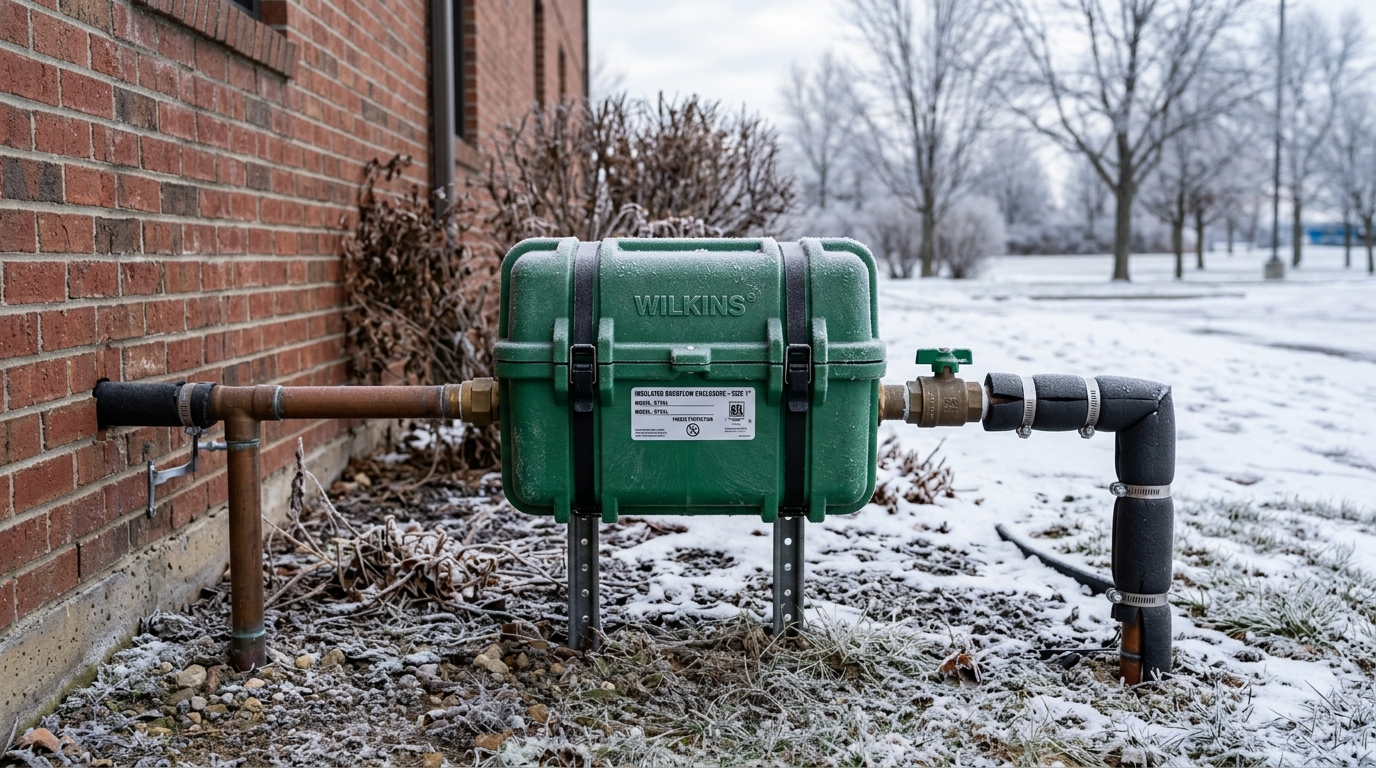
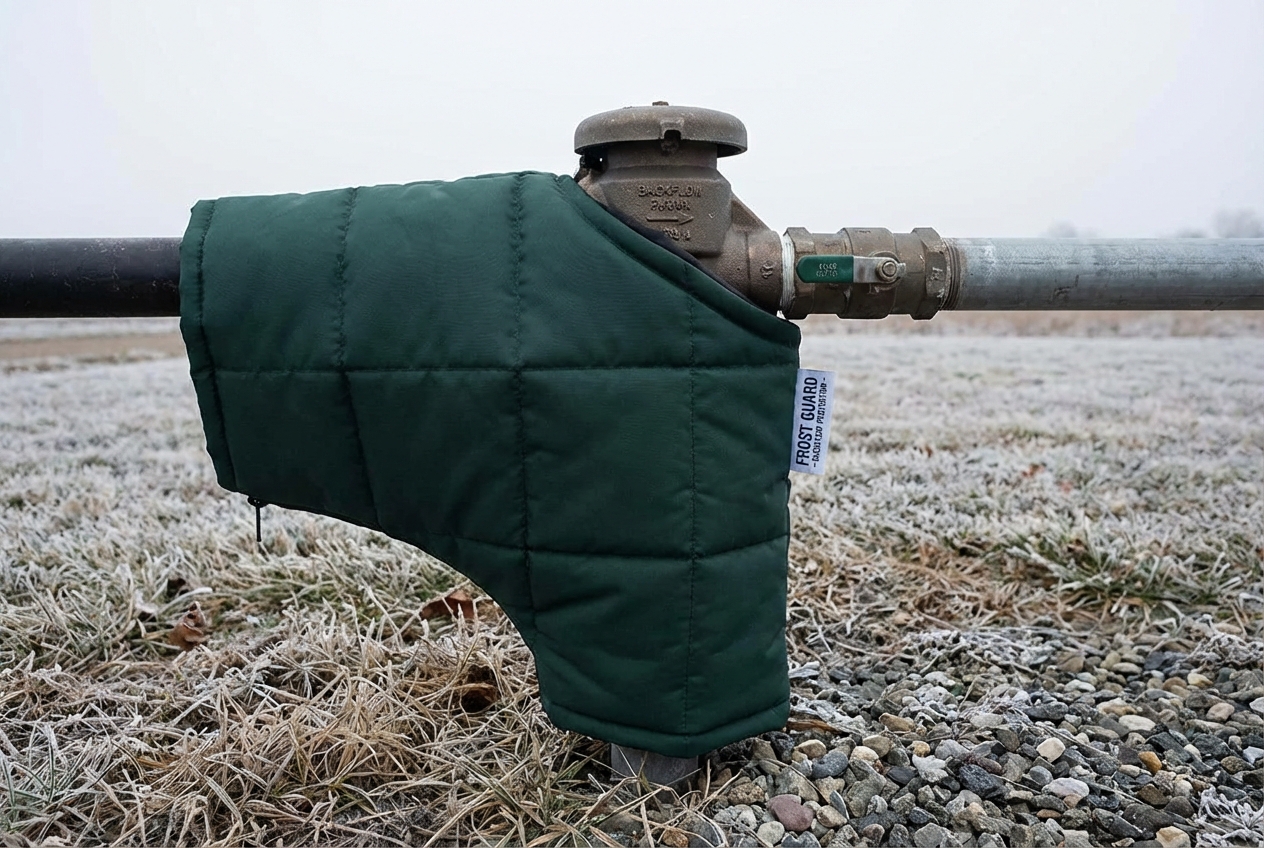
Insulate exposed assemblies. Use insulated enclosures rated for your climate zone, not just pipe wrap. A proper backflow preventer enclosure covers the entire assembly, including test cocks and the relief valve drain. Off-the-shelf insulated pouches work for residential devices. Commercial properties with above-ground RPZ assemblies need hard-shell insulated enclosures or heated cabinets.
Drain the device if it will be out of service. Irrigation systems are the most common example. If you're shutting down sprinklers for winter, have the system blown out with compressed air and the backflow preventer properly drained. Open both test cocks and the shutoff valves to allow any residual water to escape.
Check heat tape if installed. Properties in freeze-prone zones often use thermostatically controlled heat tape wrapped around the assembly. Verify it powers on when temperatures drop below 38°F. Replace any heat tape older than five years or showing cracked insulation.
Know your shutoff locations. If a pipe bursts upstream or downstream of your backflow preventer during a freeze event, you need to isolate it fast. Make sure gate valves or ball valves on both sides of the assembly operate freely. A seized shutoff valve during a freeze emergency turns a manageable repair into a flooding disaster.
Commercial properties: If you have RPZ assemblies in a vault or below-grade pit, check that the vault lid seals properly and that drainage works. A vault that floods and then freezes will destroy the assembly just as effectively as direct exposure.
 Insulated backflow preventer enclosure on an outdoor pipe during winter with frost on surrounding ground
Spring: Post-Thaw Inspection and Sediment Flush
Spring is when most backflow preventer problems reveal themselves. As frozen ground thaws, water mains experience pressure fluctuations and sediment disturbances. Municipal systems often flush hydrants in spring, pushing debris through distribution lines. That debris ends up lodged in your backflow preventer's check valves and seats.
Spring maintenance checklist:
Visual inspection first. Before turning on any seasonal system, walk every backflow preventer on your property. Look for cracked bodies, leaking test cocks, active drips from the relief valve (on RPZ devices), and any sign of physical damage from winter.
Open the downstream shutoff slowly. When reactivating an irrigation or fire suppression system after winter shutdown, bring pressure back gradually. A sudden pressure surge through a cold, dry assembly can damage check valve discs and blow out weakened seals.
Listen for the relief valve. On RPZ assemblies, a properly functioning relief valve will spit briefly when the system pressurizes, then seal. If it runs continuously, the check valves may be fouled with sediment or damaged from freeze exposure. This needs professional attention — a dumping relief valve is telling you the device is actively preventing backflow, but the underlying check valve failure must be repaired.
Schedule your annual test. Spring is the most common time for annual backflow testing in most jurisdictions. Many water utilities send compliance notices in March or April with deadlines in May or June. Don't wait until the deadline. Certified testers book up fast in spring, and if your device fails, you'll need time for repairs and a retest.
Flush upstream lines. If your property has a strainer or filter upstream of the backflow preventer, clean it. Sediment that accumulates over winter and gets disturbed during spring thaw is the number one cause of check valve fouling in April and May.
For irrigation systems specifically: Have the system pressurized and run through all zones before your backflow test. This flushes debris through the system rather than letting it settle in the preventer. Some testers will do this as part of a spring startup service.
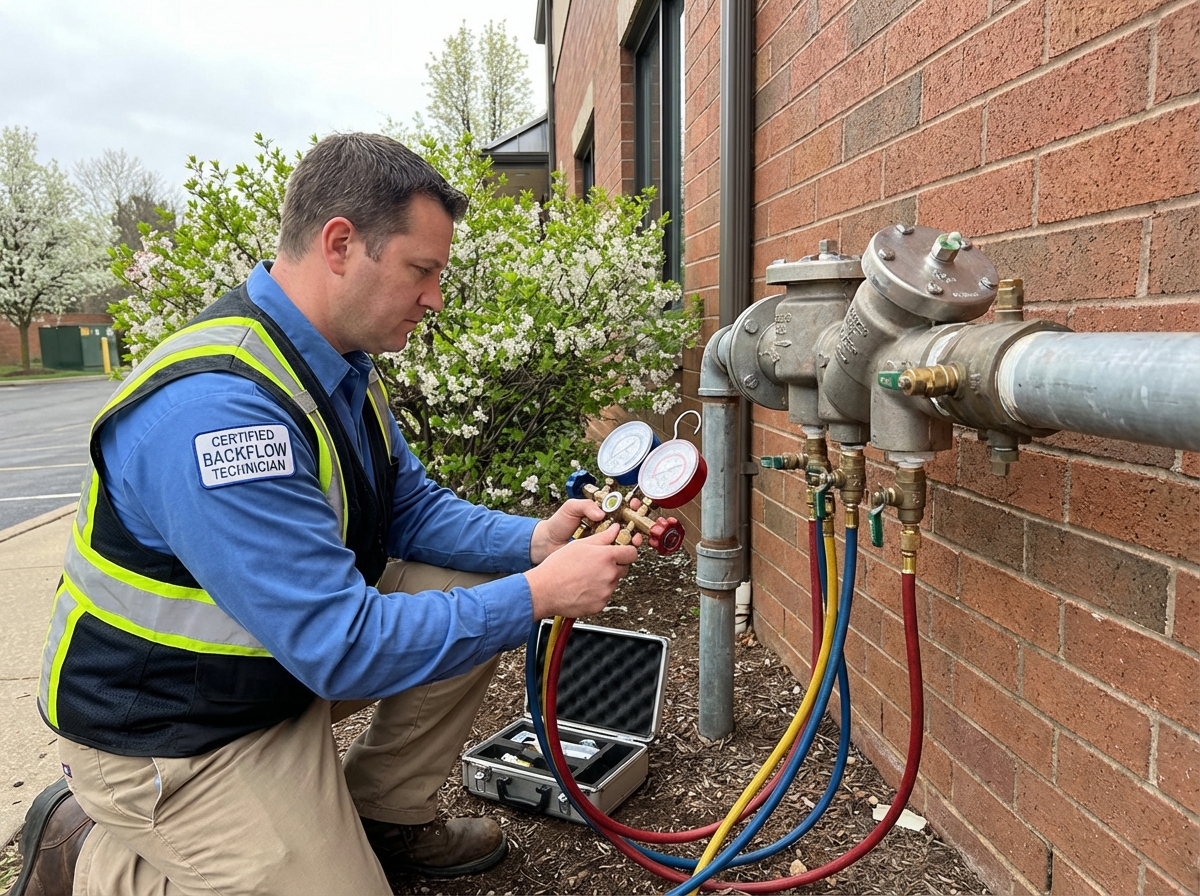 Certified technician with test kit gauges connected to a backflow preventer assembly on the side of a commercial building in spring
Summer: Managing Heat and High Demand
Summer seems harmless compared to winter freeze risks, but it brings its own set of problems. High ambient temperatures, peak water demand, and continuous operation of irrigation systems all stress backflow preventers in ways that cause slow degradation.
Heat-related issues:
- Rubber components inside check valves and O-rings dry out and lose elasticity faster under sustained heat. Devices installed in direct sun exposure on south-facing walls are especially vulnerable.
- Thermal expansion in copper and brass fittings can loosen connections over time. A joint that was tight in spring may develop a slow weep by August.
- RPZ relief valves may drip intermittently on very hot days as thermal expansion causes momentary pressure differentials. Occasional dripping in extreme heat is normal. Continuous flow is not.
Summer maintenance steps:
Provide shade where possible. A simple UV-resistant cover or shade structure over an exposed backflow preventer reduces thermal cycling stress significantly. This is especially important for PVB (pressure vacuum breaker) devices installed on irrigation lines, which are almost always in direct sunlight.
Check for leaks monthly during irrigation season. Walk the assembly once a month. A small drip in June becomes a significant leak by September. Catching it early means a simple seal replacement instead of a full rebuild.
Monitor water pressure. Summer peak demand can cause pressure drops in municipal systems, especially in neighborhoods where heavy irrigation occurs simultaneously. Low inlet pressure can cause backflow preventers to malfunction — PVBs are particularly sensitive to this. If you notice your PVB dumping water during peak evening irrigation hours, low supply pressure may be the cause.
Keep the area around the device clear. Vegetation grows fast in summer. Overgrown shrubs or grass around a backflow preventer block airflow, trap moisture, and make inspection difficult. Keep at least 12 inches of clearance on all sides. Your backflow tester will thank you, and so will the plumber who eventually needs to service it.
Commercial operators with cooling towers: Cooling tower makeup water lines often have dedicated backflow preventers that run continuously all summer. These devices see more wear from May through September than the rest of the year combined. Consider a mid-season inspection if your annual test falls in a different quarter.
Fall: Preparing for Shutdown and Freeze Prevention
Fall maintenance is about preparing for winter while also addressing any wear from summer operation. Think of it as closing the loop before the dangerous season begins.
Fall maintenance checklist:
Schedule irrigation winterization early. In northern climates, irrigation blowouts should happen before the first hard freeze, which can come as early as October. A professional winterization includes draining and blowing out the backflow preventer. If you wait too long, you're gambling with freeze damage.
Inspect and replace worn components. If your annual test revealed borderline readings on check valves or relief valves earlier in the year, fall is the time to do repairs. Replacing a $15 rubber kit in October is far cheaper than replacing a $400 assembly that cracked in January because a worn seal let water pool inside.
Test shutoff valves. Exercise the gate valves or ball valves upstream and downstream of every backflow preventer. Valves that sit in one position for months can seize. Working them open and closed a few times in fall ensures they'll function when you need them in an emergency.
Install or verify winter protection. Put insulated enclosures in place before you need them. Check that any heat tape or thermostatically controlled systems are functional. Replace batteries in any temperature monitoring alarms.
Document everything. Note the condition of each assembly, any repairs made, and the date of winterization. This record is valuable for your annual compliance file and helps your backflow tester understand the device's history.
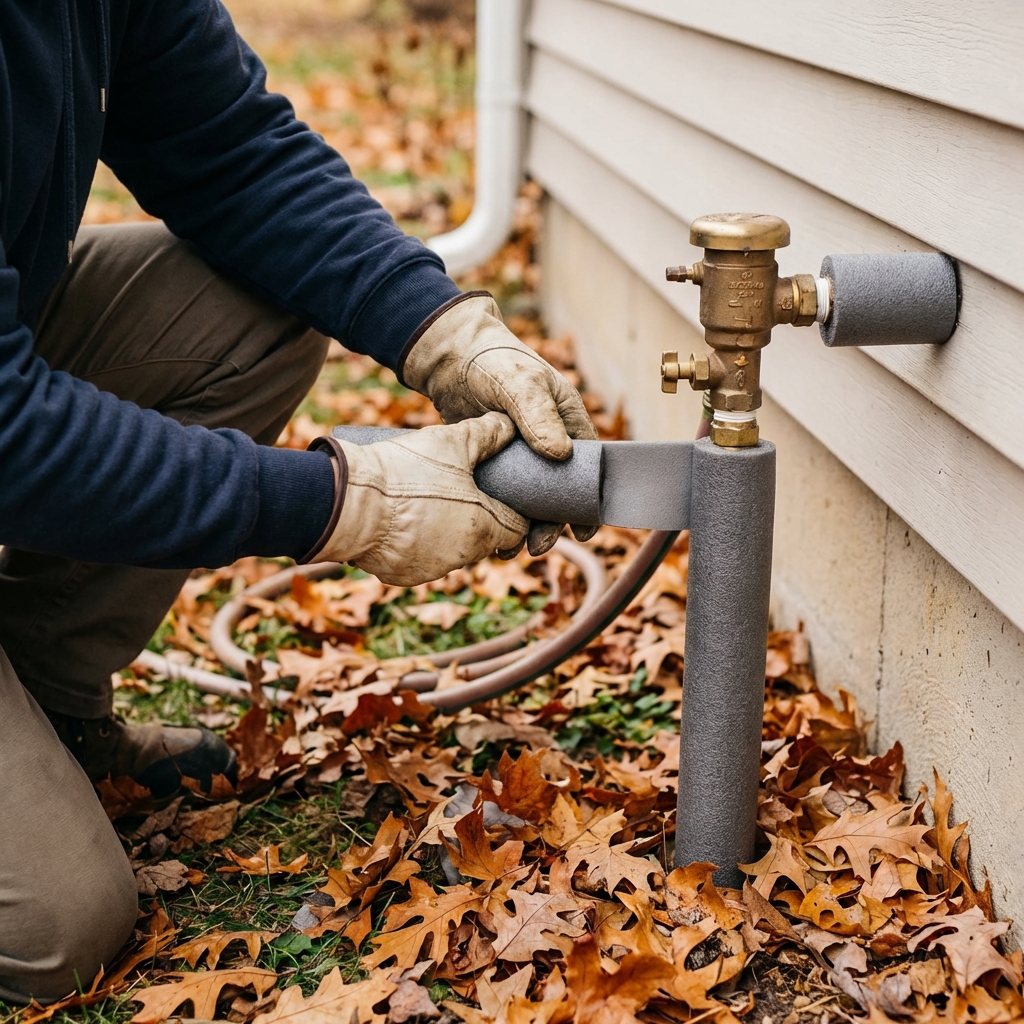 Homeowner wrapping outdoor backflow preventer pipes with foam insulation tape in a fall yard with leaves on the ground
When to Call a Certified Backflow Tester
Seasonal maintenance extends the life of your backflow preventer and reduces the chance of failure, but it does not replace the required annual test performed by a certified tester. Here's when you should call a professional beyond your regular annual appointment:
- Any visible leak from the body, test cocks, or relief valve that persists for more than a few minutes
- After any freeze event where temperatures dropped below 28°F for more than four hours with the device pressurized
- When reactivating a system that's been off for more than 90 days
- If you receive a compliance notice indicating your test is overdue or your device has been flagged
- After any nearby water main break or repair, which can send pressure surges and debris through your line
Most jurisdictions require that only state-certified backflow assembly testers perform annual tests and repairs. DIY maintenance like insulation, clearing vegetation, and visual inspections is appropriate and encouraged. But anything involving the internal components — check valves, relief valves, seals, and springs — should be handled by a certified professional.
Keep Your Device Compliant and Functional Year-Round
A backflow preventer that receives seasonal attention will typically last 15 to 25 years before needing full replacement. One that gets ignored will fail in five or less — usually at the worst possible time.
The cost of seasonal maintenance is minimal. Insulation materials run $20 to $80. A professional winterization for an irrigation system costs $75 to $150. Compare that to $300 to $1,200 for a new assembly plus installation, plus the cost of emergency service if a failure happens over a holiday weekend in January.
Your seasonal action plan:
- Winter: Insulate, drain idle systems, verify heat tape, know your shutoffs
- Spring: Inspect for freeze damage, flush sediment, schedule your annual test early
- Summer: Shade exposed devices, check monthly for leaks, monitor pressure
- Fall: Winterize irrigation, make repairs, exercise valves, install protection
If you're due for your annual backflow test or need a post-winter inspection, use the FindBackflowTesters.com directory to locate a certified tester in your area. Getting ahead of maintenance now saves money, prevents violations, and — most importantly — protects your water supply.