RPZ vs DCVA: Which Backflow Preventer Does Your Property Need?
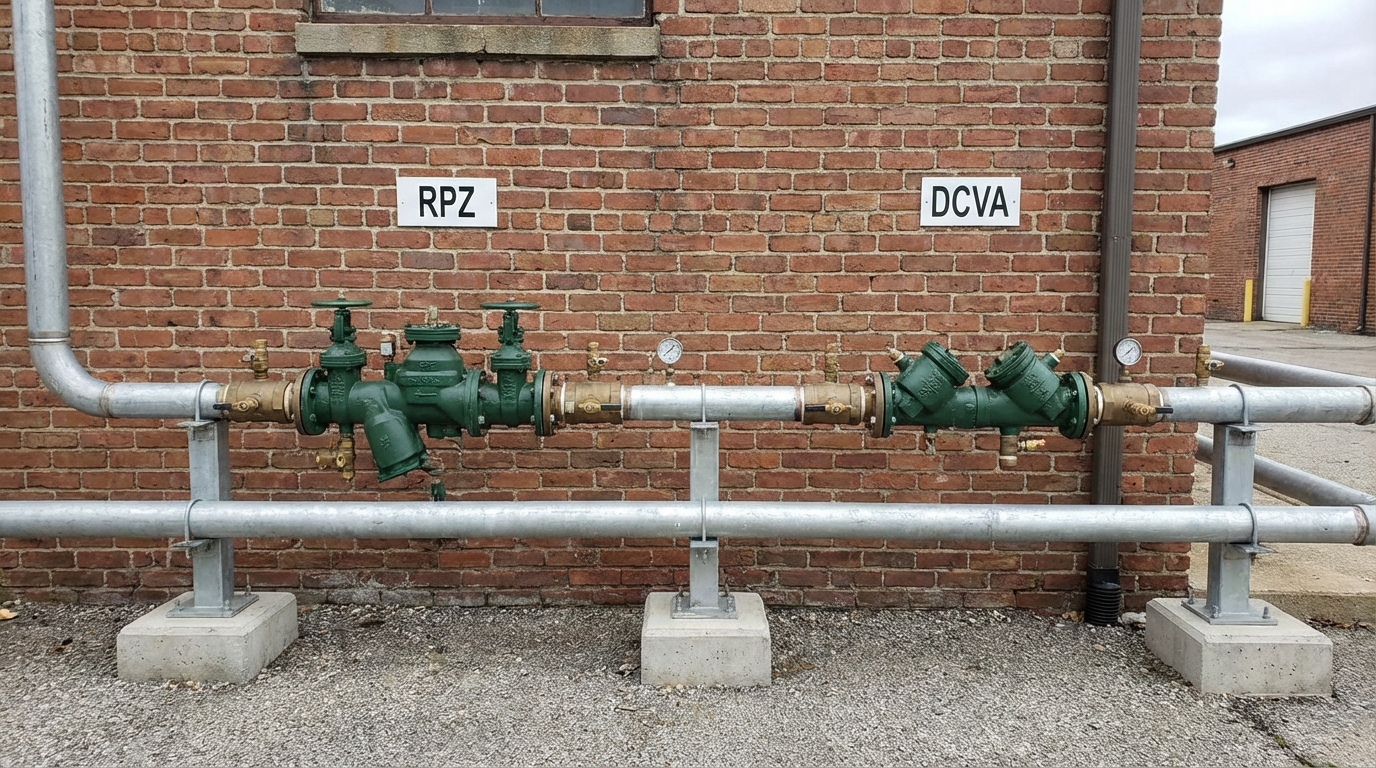
RPZ vs DCVA: Which Backflow Preventer Does Your Property Need?
If you've been told your property needs a backflow preventer — or you're replacing an aging one — you've likely run into two acronyms: RPZ and DCVA. Both devices protect your drinking water from contamination, but they work differently, cost differently, and are required in different situations. Choosing the wrong one can mean a failed inspection, wasted money, or an installation that your water authority won't approve.
This guide breaks down exactly how each device works, where each one is required, and how to decide which is right for your property.
What These Devices Actually Do
Every backflow preventer has one job: stop water from flowing backward into the public water supply. Backflow happens when pressure drops on the supply side (from a water main break, heavy fire hydrant use, or a sudden demand spike) and contaminated water gets pulled or pushed from your property back into the municipal system.
Both RPZ and DCVA assemblies prevent this. The difference is how they handle failure — and that difference determines where your local code allows each one.
How a DCVA Works
A Double Check Valve Assembly (DCVA, also called a DC or double check) uses two independently operating spring-loaded check valves in series. Water flows through the first check valve, then the second. If backpressure or back-siphonage occurs, both valves close to block reverse flow.
The logic is simple redundancy. If one check valve fails — a piece of debris holds it open, a spring weakens, a seal degrades — the second valve still blocks backflow. Both would need to fail simultaneously for contamination to pass through.
DCVAs are compact, relatively affordable, and can be installed in a vault below ground. They don't discharge water during normal operation, which makes them practical in locations where drainage is limited.
Key characteristics of a DCVA:
- Two check valves in series with test cocks for annual testing
- No relief valve — fails closed
- Can be installed below ground in a vault
- Quieter operation with no intermittent discharge
- Lower purchase and installation cost
- Approved for low-hazard (also called "degree of hazard — pollutant") connections
How an RPZ Works
A Reduced Pressure Zone Assembly (RPZ, also called an RP or reduced pressure principle device) has the same two check valves as a DCVA, but adds a hydraulically operated relief valve in the zone between them. This middle zone is maintained at a pressure lower than the supply pressure — hence the name.
Here's what makes the RPZ fundamentally different: if either check valve fails, the relief valve opens and dumps water out of the bottom of the assembly. The device is designed to fail open to atmosphere rather than allow any backflow. It sacrifices water to protect the public supply.
This means an RPZ can never fail silently. A stuck check valve or fouled seat will result in water pouring from the relief valve — a visible, obvious sign that something is wrong and the device needs service. That self-reporting failure mode is why water authorities require RPZs for higher-hazard connections.
Key characteristics of an RPZ:
- Two check valves plus a differential pressure relief valve
- Fails open — discharges water rather than allowing backflow
- Must be installed above ground (typically 12 inches minimum above grade) to prevent submersion of the relief valve
- Requires adequate drainage at the installation site
- Higher purchase and installation cost
- Approved for high-hazard (also called "degree of hazard — health hazard") connections
- Also approved for any application where a DCVA would suffice
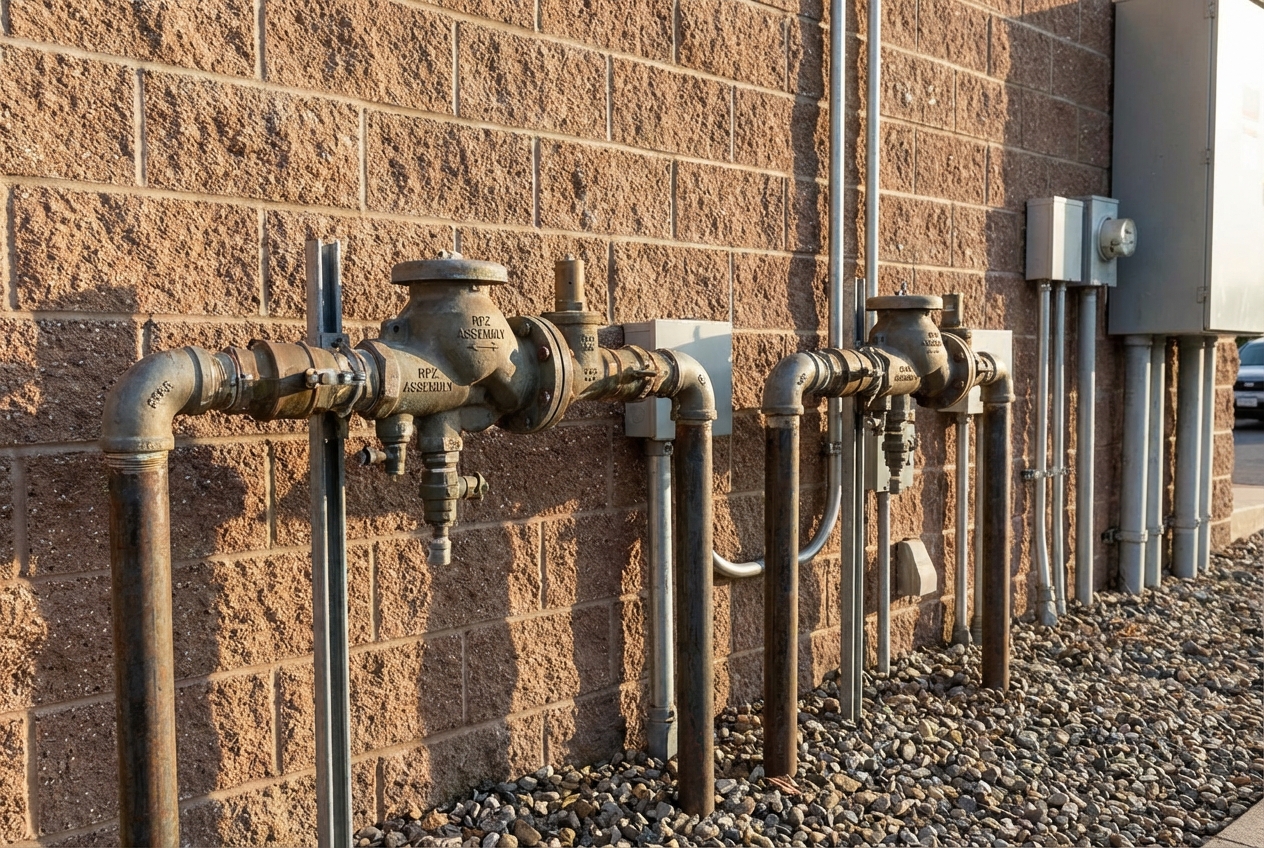 Side-by-side comparison of an RPZ and DCVA backflow preventer assembly mounted on exterior pipes near a commercial building
When Code Requires Each Device
Your water purveyor or local plumbing authority classifies connections by the degree of hazard the downstream use poses to the public water supply. This classification — not your personal preference — determines which device you need.
DCVA Is Typically Required (or Allowed) For:
- Fire sprinkler systems with no chemical additives (antifreeze-free, no auxiliary water supply)
- Commercial buildings with standard plumbing and no high-hazard processes
- Multi-family residential properties in many jurisdictions
- Irrigation systems connected to potable water without chemical injection
- Any connection classified as a pollutant hazard (non-health, nuisance-level risk)
RPZ Is Typically Required For:
- Commercial and industrial facilities with chemical processes, boilers with chemical treatment, or cooling towers
- Medical and dental offices with autoclaves, lab equipment, or vacuum systems
- Car washes, laundromats, and dry cleaners where chemicals contact the water supply
- Fire sprinkler systems that use antifreeze, are connected to an auxiliary (non-potable) water source, or are in systems classified as high-hazard
- Irrigation systems with chemical injection (fertilizer injectors, pesticide applicators)
- Food and beverage processing facilities
- Any connection classified as a health hazard (potential to cause illness or death)
Some jurisdictions default to requiring an RPZ for all commercial connections regardless of hazard level. Others allow a DCVA for commercial properties as long as the use is low-hazard. Always confirm with your local water authority before purchasing a device.
Cost Comparison: What to Expect in 2026
Pricing varies by size, brand, and region, but here's what property owners typically see for a standard 1-inch residential or small commercial installation:
DCVA:
- Device cost: $150–$400
- Installation: $300–$800
- Annual testing: $75–$150
RPZ:
- Device cost: $350–$900
- Installation: $500–$1,500
- Annual testing: $100–$200
The RPZ costs more at every stage. The device itself is more complex, installation requires above-ground mounting with proper drainage (sometimes including a gravel pad or drain line), and annual testing takes longer because the relief valve must be checked in addition to both check valves.
For larger commercial sizes (2-inch, 3-inch, 4-inch and above), the price gap widens significantly. A 4-inch RPZ assembly can run $3,000–$6,000 for the device alone, while a comparable DCVA might be $1,500–$3,000.
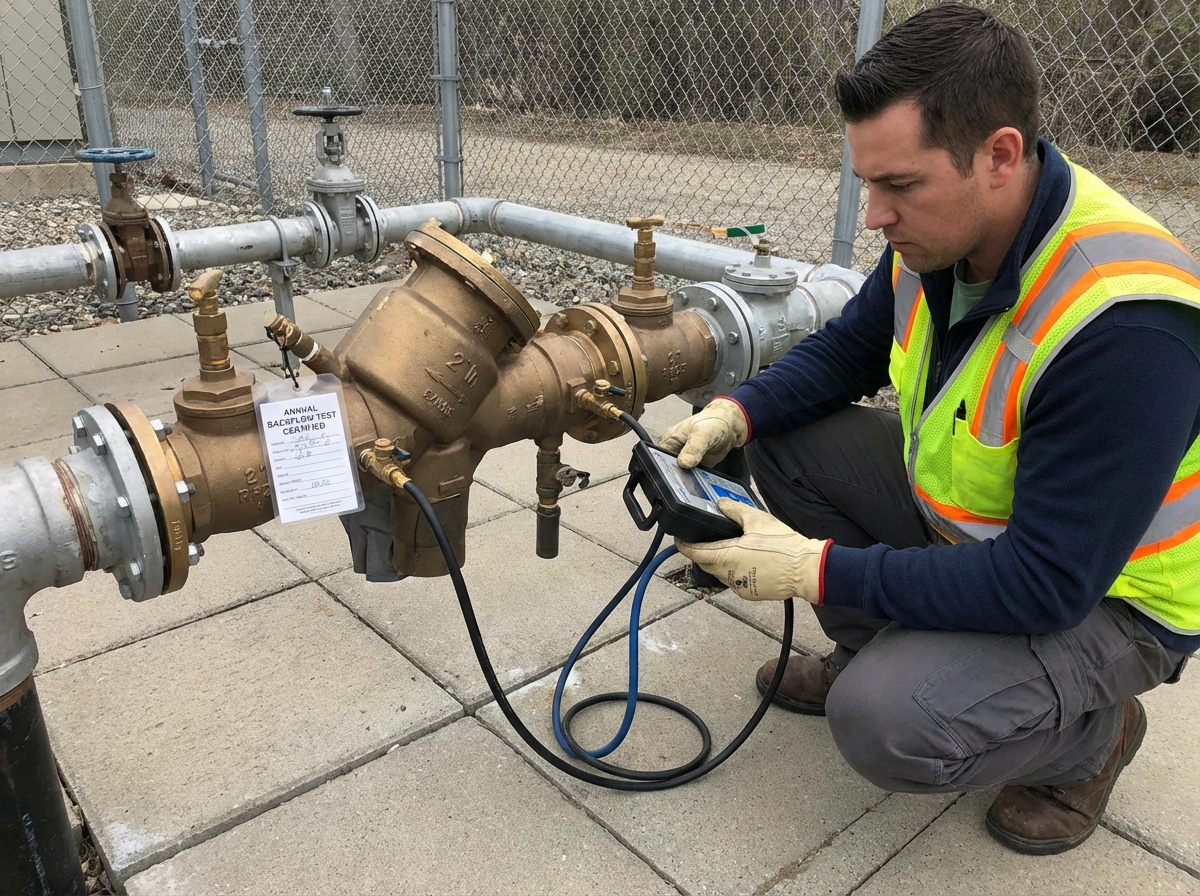 A certified backflow tester performing an annual test on a 2-inch RPZ assembly using a differential pressure test kit in an outdoor mechanical area
Installation Differences That Matter
The biggest practical difference between these two devices comes down to one thing: drainage.
An RPZ will discharge water. It discharges small amounts intermittently during normal operation as the relief valve adjusts, and it can discharge significant volumes if a check valve fails. This means:
An RPZ cannot be installed in a vault or pit. If the vault floods, the relief valve could become submerged, and a submerged relief valve defeats the entire purpose of the device. Most codes require a minimum of 12 inches of clearance between the relief valve discharge port and the ground or any potential flood level.
You need a plan for the water. A gravel dry well, a drain line to a storm drain (where permitted), or grading that directs water away from the building foundation. Property owners are sometimes surprised when their newly installed RPZ periodically drips or streams water — this is normal, not a leak.
Freeze protection is more complex for RPZs. Since they must be above ground, RPZs in cold climates need insulated enclosures, heat tape, or recirculation systems. A DCVA in an underground vault has natural freeze protection from the earth.
A DCVA, by contrast, can go in a below-grade vault, doesn't discharge water, and presents fewer drainage and freeze-protection challenges. If your hazard classification allows a DCVA, installation is generally simpler and cheaper.
Can You Use an RPZ Where a DCVA Is Required?
Yes. An RPZ provides a higher level of protection than a DCVA, so it's accepted anywhere a DCVA would be. You're essentially over-protecting, which code authorities have no problem with.
However, the reverse is never true. You cannot install a DCVA where an RPZ is required. If your connection is classified as a health hazard, only an RPZ (or in some cases an air gap) will satisfy the requirement.
Some property owners choose to install an RPZ even when a DCVA would pass inspection, reasoning that they'd rather have the extra protection. That's a valid choice, but it comes with the higher cost, drainage requirements, and maintenance considerations described above.
Common Mistakes Property Owners Make
Installing the wrong device and failing inspection. This happens more often than you'd think, especially when property owners buy a device before confirming their hazard classification. Always check with your water purveyor first.
Putting an RPZ in a vault. Contractors unfamiliar with backflow code sometimes install an RPZ underground. This will fail inspection and require a costly reinstallation.
Ignoring drainage for an RPZ. An RPZ installed on a concrete pad with no drainage plan creates puddles, ice hazards in winter, and potential foundation issues. Plan the drainage before installation.
Skipping annual testing. Both devices require annual testing by a certified backflow tester. Many jurisdictions suspend water service for non-compliance. The test verifies that check valves are sealing properly and (for RPZs) that the relief valve opens at the correct differential pressure.
Assuming the device lasts forever. Internal components — springs, rubber seats, O-rings, and diaphragms — wear out. Most assemblies last 15–25 years with regular maintenance, but individual components may need replacement every 5–8 years depending on water quality.
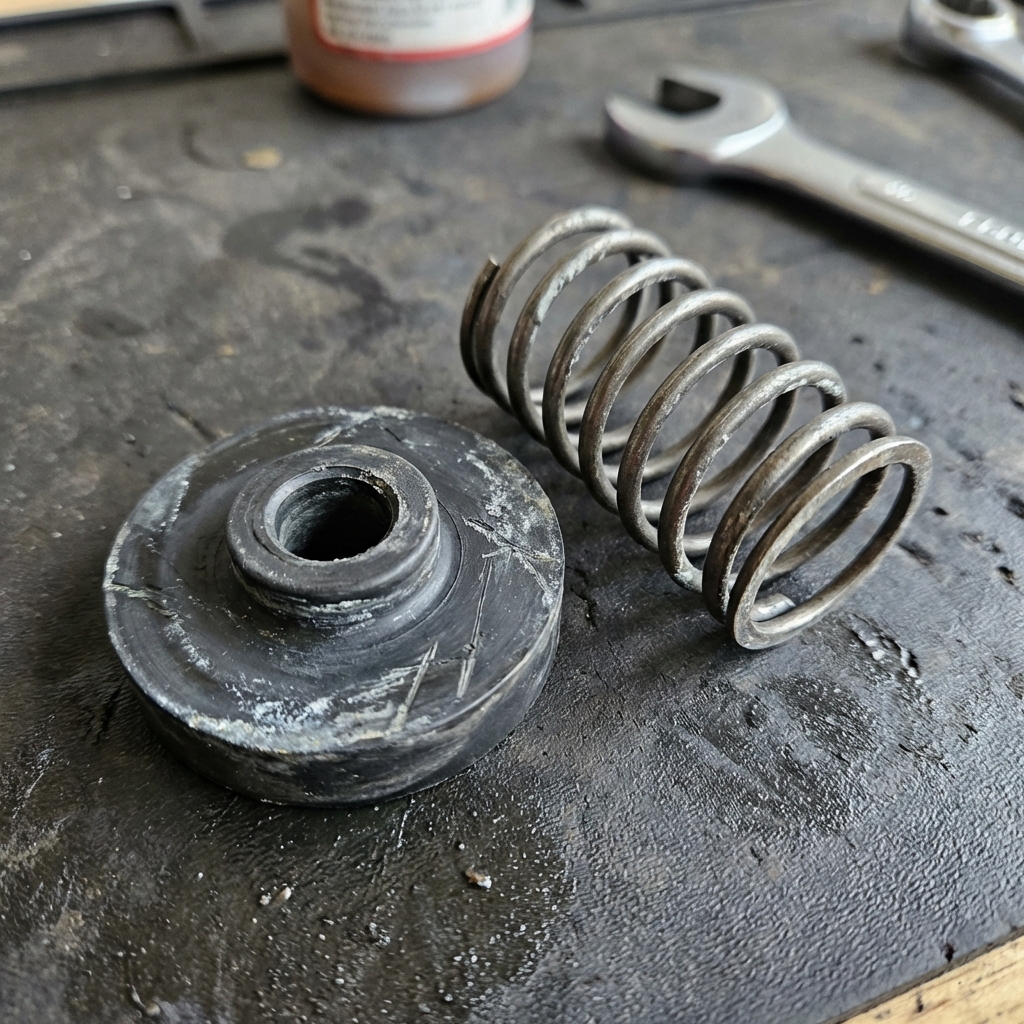 Close-up of worn rubber check valve disc and spring removed from a backflow preventer during a repair, sitting on a technician's work mat
How to Decide: A Quick Checklist
- Contact your water purveyor and ask what hazard classification applies to your property and connection type.
- Get the requirement in writing — ask for the specific code section or policy that applies.
- If a DCVA is allowed and your downstream use is genuinely low-hazard, a DCVA saves money on purchase, installation, and annual maintenance.
- If an RPZ is required, plan for above-ground installation with proper drainage before getting quotes.
- Get quotes from certified backflow installation professionals who are familiar with your local code. An experienced installer will confirm the correct device, size, and orientation.
- Schedule your initial test immediately after installation — most jurisdictions require a passing test report before the assembly is considered compliant.
Next Steps
If you're unsure which device your property needs, start by calling your local water utility's cross-connection control department. They maintain records of your property's hazard classification and can tell you exactly what's required.
Once you know the requirement, find a certified backflow tester in your area who also handles installations. A professional who both installs and tests backflow preventers can ensure the assembly is installed correctly, passes its initial test, and is set up for straightforward annual testing going forward.
Annual testing is not optional in most jurisdictions — it's a legal requirement. Whether you end up with an RPZ or a DCVA, put the test date on your calendar and keep your compliance records current. A lapsed test can result in fines, water shutoff notices, or both.
The right backflow preventer, properly installed and annually tested, protects your property, your tenants, and your community's drinking water. Get the classification right, hire a certified professional, and stay current on testing — everything else follows from there.