How to Tell When Your Backflow Preventer Needs Repair or Replacement
How to Tell When Your Backflow Preventer Needs Repair or Replacement
Your backflow preventer sits quietly on your property, doing one critical job: keeping contaminated water from flowing backward into the clean drinking supply. Most people forget it exists until something goes wrong. By then, you might be dealing with failed inspections, water quality complaints, or costly emergency repairs.
Knowing what to watch for can save you money, keep you compliant with local codes, and — most importantly — protect the health of everyone who uses your water.
This guide covers the most common warning signs that your backflow prevention device is failing, when repair makes sense versus full replacement, and what to do next.
Understanding What Can Go Wrong
Backflow preventers are mechanical devices with internal components — check valves, springs, seals, and relief valves — that wear out over time. Exposure to weather, water pressure fluctuations, debris in the water supply, and simple age all take their toll.
The two most common types you'll encounter on residential and commercial properties are reduced pressure zone (RPZ) assemblies and double check valve assemblies (DCVA). Both rely on moving parts that eventually degrade. RPZ devices have a relief valve that actively discharges water when something fails, which makes certain problems more obvious. Double checks can fail silently, which is why annual testing matters so much.
Regardless of the type installed on your property, here are the signs you should never ignore.
Visible Water Discharge From the Relief Valve
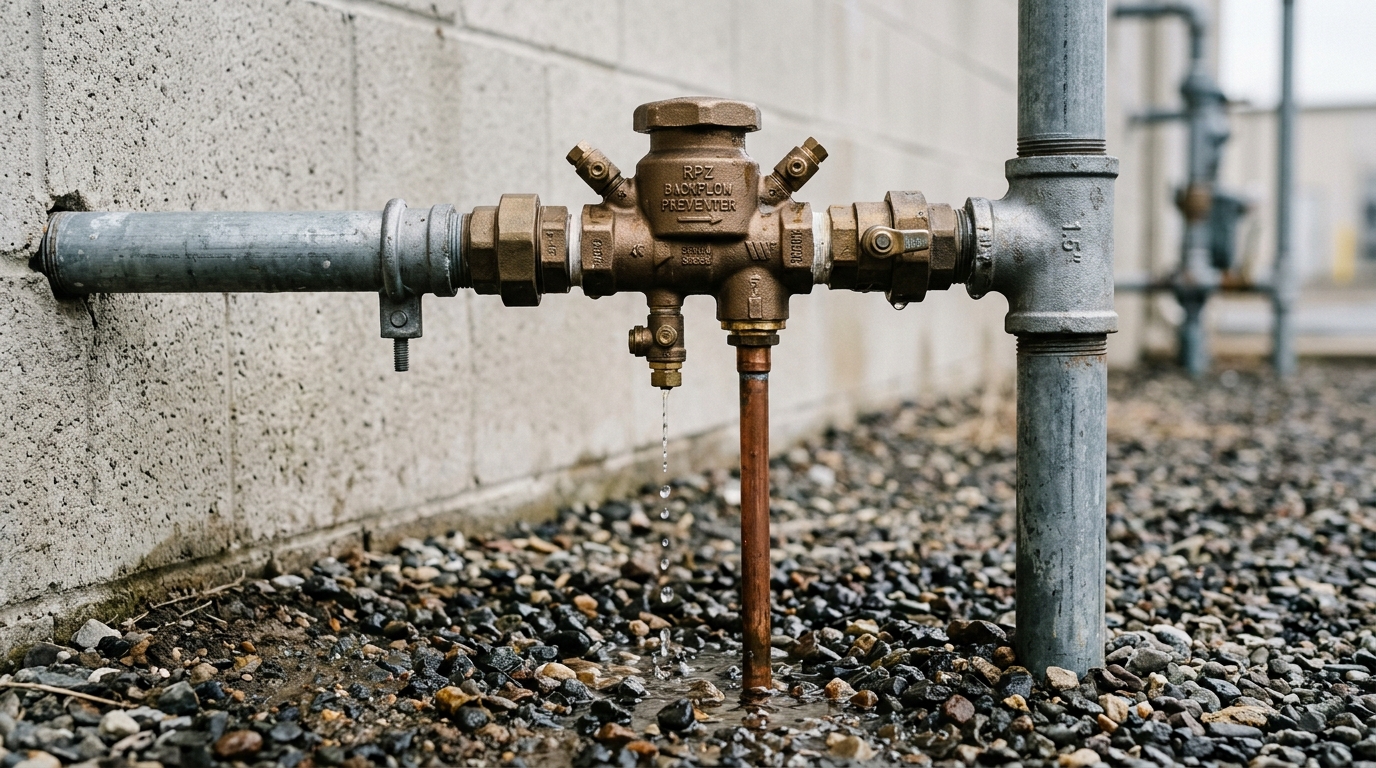
If you have an RPZ assembly and you see water steadily draining from the relief valve (the port that faces downward between the two check valves), something is wrong internally. A small, occasional drip can be normal — the relief valve is designed to open when it detects a pressure differential. But continuous or heavy discharge means one or both check valves are not seating properly.
Common causes include:
- Debris lodged in a check valve — small rocks, sediment, or mineral buildup can prevent the valve from closing completely
- Worn rubber seals or o-rings — these harden and crack over time, especially in areas with extreme temperature swings
- A failed spring — the springs that hold check valves closed weaken with age and corrosion
- Excessive water pressure — sustained high pressure accelerates wear on all internal components
If the discharge is minor and intermittent, a rebuild of the affected check valve usually solves the problem. Heavy, constant flow often means multiple components have failed and replacement of the entire assembly may be more cost-effective than repairing it.
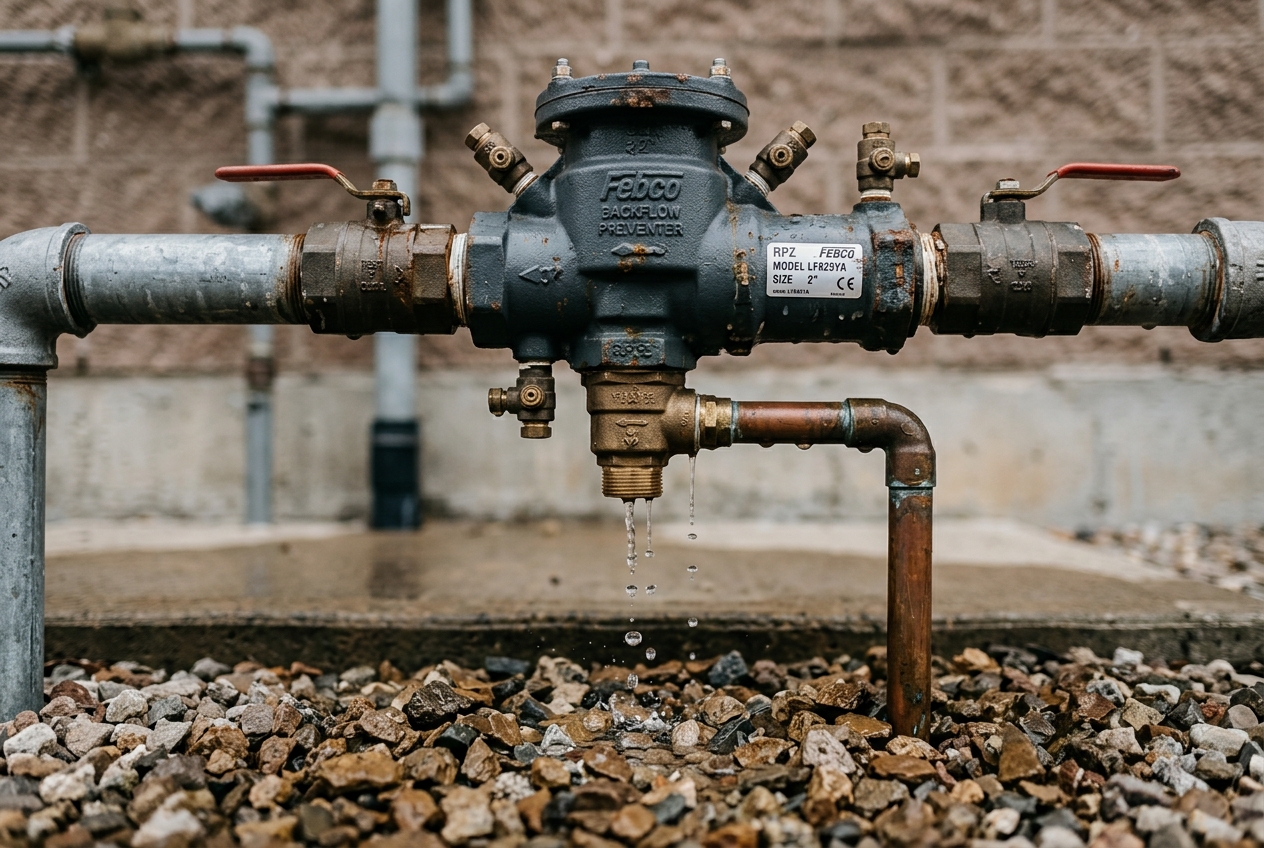 Close-up of an RPZ backflow preventer mounted on a pipe with water dripping from its relief valve onto a gravel pad
Fluctuating or Low Water Pressure
A sudden drop in water pressure inside your building can point to a backflow preventer that's partially obstructing flow. This happens when a check valve gets stuck in a partially closed position or when internal corrosion narrows the waterway.
You might notice:
- Reduced pressure at faucets and fixtures closest to the backflow device
- Pressure that fluctuates without any obvious cause (no one else is running water, no irrigation is active)
- Sprinkler zones that won't fully pressurize
Before blaming the backflow preventer, rule out other causes like a failing pressure regulator, a main line leak, or municipal supply issues. But if you've had the device for more than eight to ten years and pressure problems have crept in gradually, the preventer is a likely suspect.
A certified backflow tester can perform a differential pressure test that will tell you exactly whether the device is restricting flow beyond acceptable limits.
Failed Annual Test Results
Every jurisdiction that requires backflow prevention also requires periodic testing — usually once a year. During this test, a certified tester uses gauges to measure the pressure differential across each check valve and the relief valve (on RPZ devices). The results tell you whether each component is holding within the thresholds set by the manufacturer and local code.
A failed test doesn't always mean you need a new device. Here's how to read the situation:
Likely repairable:
- One check valve barely missed the threshold — a rebuild kit (new seals, springs, and seat disc) often brings it back into spec
- The relief valve opened at the wrong pressure — this component can usually be rebuilt or replaced independently
- First-time failure on a device that's less than ten years old
Likely needs replacement:
- Both check valves failed simultaneously
- The device has failed tests in consecutive years despite repairs
- Internal corrosion is visible when the tester opens the assembly
- The body of the device shows cracks, heavy pitting, or structural damage
- The model has been discontinued and parts are no longer available
Your tester should be able to walk you through the results and give you a straight recommendation. If you're not confident in their assessment, get a second opinion — especially before authorizing a full replacement on a commercial system, where the device and installation can cost several thousand dollars.
Discolored or Odd-Tasting Water
This one gets people's attention fast. If your water suddenly looks rusty, cloudy, or has an unusual taste or smell, a failed backflow preventer could be allowing contaminated water to siphon back into your supply lines.
This is the scenario backflow prevention exists to stop. Causes of actual backflow events include:
- A water main break or hydrant flushing that creates negative pressure in the supply line
- A fire department connection drawing heavy volume nearby
- An irrigation system with fertilizer injection feeding back into the potable supply
- Cross-connections with boilers, cooling towers, or industrial equipment
If you suspect actual backflow contamination, stop using the water immediately and contact your water utility. This is a health emergency, not a maintenance issue. After the immediate concern is addressed, have your backflow device inspected and tested. If it allowed contamination through, it needs repair or replacement before you return the system to service.
Not every water quality issue is backflow-related — aging pipes, water heater problems, and municipal supply changes can cause similar symptoms. But if the timing lines up with a known pressure event or if you have an older, untested backflow device, take it seriously.
Visible Physical Damage or Corrosion
Walk out to your backflow preventer and take a look at it. Physical inspection can reveal problems that won't show up until the next annual test.
Watch for:
- Heavy corrosion on the body or fittings — surface rust is cosmetic, but deep pitting or flaking metal compromises structural integrity
- Cracks in the body casting — even hairline cracks can widen under pressure and cause catastrophic failure
- Frozen or seized test cocks — the small valves used for testing should turn freely; if they're corroded shut, the device hasn't been maintained
- Damaged or missing covers — on above-ground installations, protective covers and insulation keep the device from freezing; missing protection means freeze damage may have already occurred
- Leaks at threaded connections or flanges — these can indicate shifting from ground settlement, thermal expansion stress, or deteriorating thread sealant
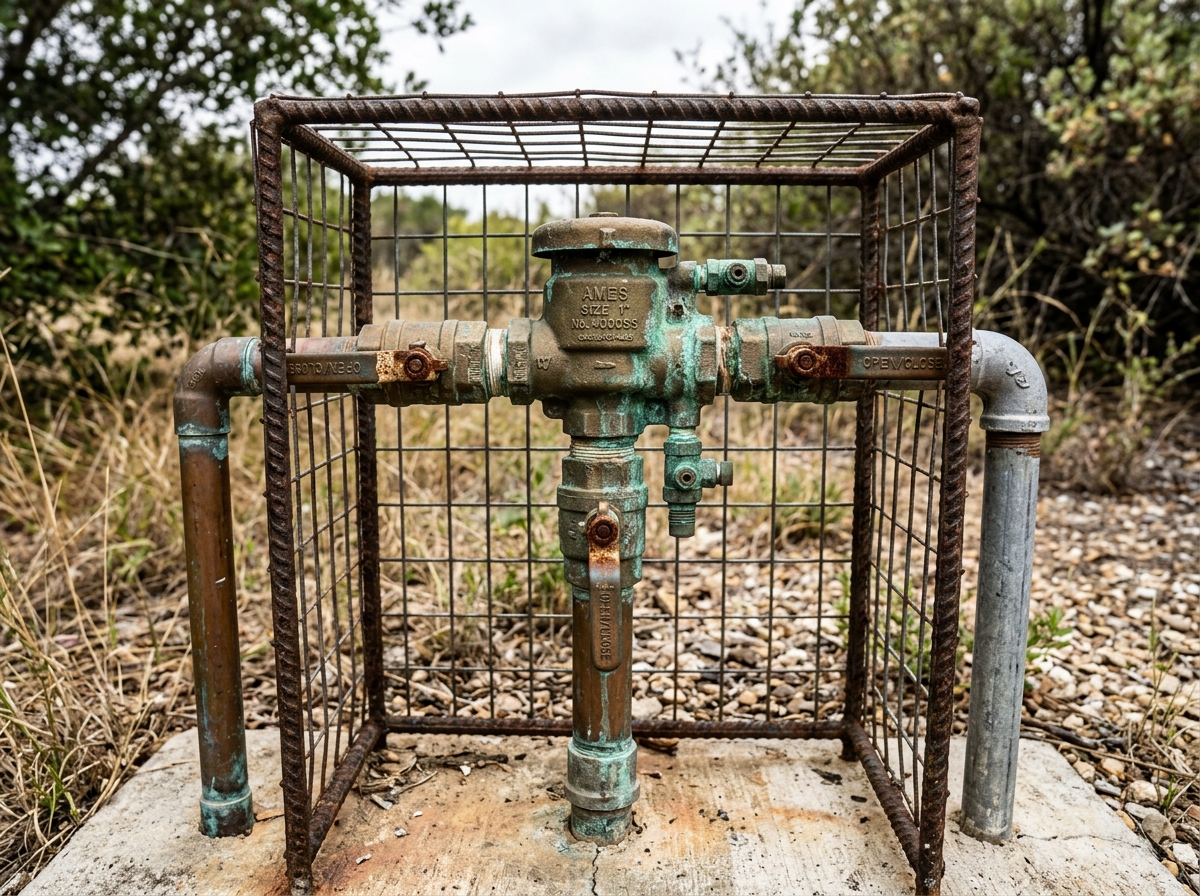 An outdoor above-ground backflow preventer assembly showing green corrosion buildup on brass fittings and a weathered protective cage
Bronze and brass devices hold up well in most conditions but will eventually corrode, especially in coastal areas, in soil contact, or where the water has aggressive chemistry. Stainless steel assemblies last longer but cost more upfront. If your bronze device is heavily corroded after fifteen to twenty years of service, replacement with a new unit is usually the smarter investment over repeated repairs.
Strange Noises Coming From the Device
Backflow preventers shouldn't make much noise during normal operation. If you hear any of the following, something warrants attention:
- Hammering or banging — water hammer near the device can indicate a check valve that's chattering (rapidly opening and closing), which accelerates wear
- Hissing or whistling — usually means water is forcing through a partially closed or damaged valve seat
- Gurgling from the relief valve — intermittent gurgling on an RPZ can indicate a check valve that's marginal and causing the relief valve to cycle
Noise alone doesn't always mean the device has failed, but it's a reliable early warning. Getting it tested and inspected when you first notice unusual sounds can catch problems before they become expensive.
Repair vs. Replacement: Making the Call
Here's a practical framework for deciding:
Repair when:
- The device is under ten years old
- Only one component has failed
- Parts are readily available
- The body and housing are in good physical condition
- This is the first failure
Replace when:
- The device is over fifteen years old (or over ten in harsh environments)
- Multiple components have failed
- The body is cracked, deeply corroded, or structurally compromised
- The device has needed repair two or more years in a row
- Parts are discontinued or hard to source
- Local code has changed and the installed device no longer meets current requirements
- You're upgrading the property's use (changing from residential to commercial, adding irrigation with chemical injection, etc.)
Repair costs for a standard residential backflow preventer typically run between $100 and $350 for parts and labor. Replacement — including the new device, installation, and required testing — generally falls in the $400 to $1,200 range for residential, and can be significantly higher for large commercial assemblies.
The math often favors replacement when you're facing a second or third repair on an aging device. Paying $250 for a rebuild only to replace the whole unit a year later means you spent that $250 for nothing.
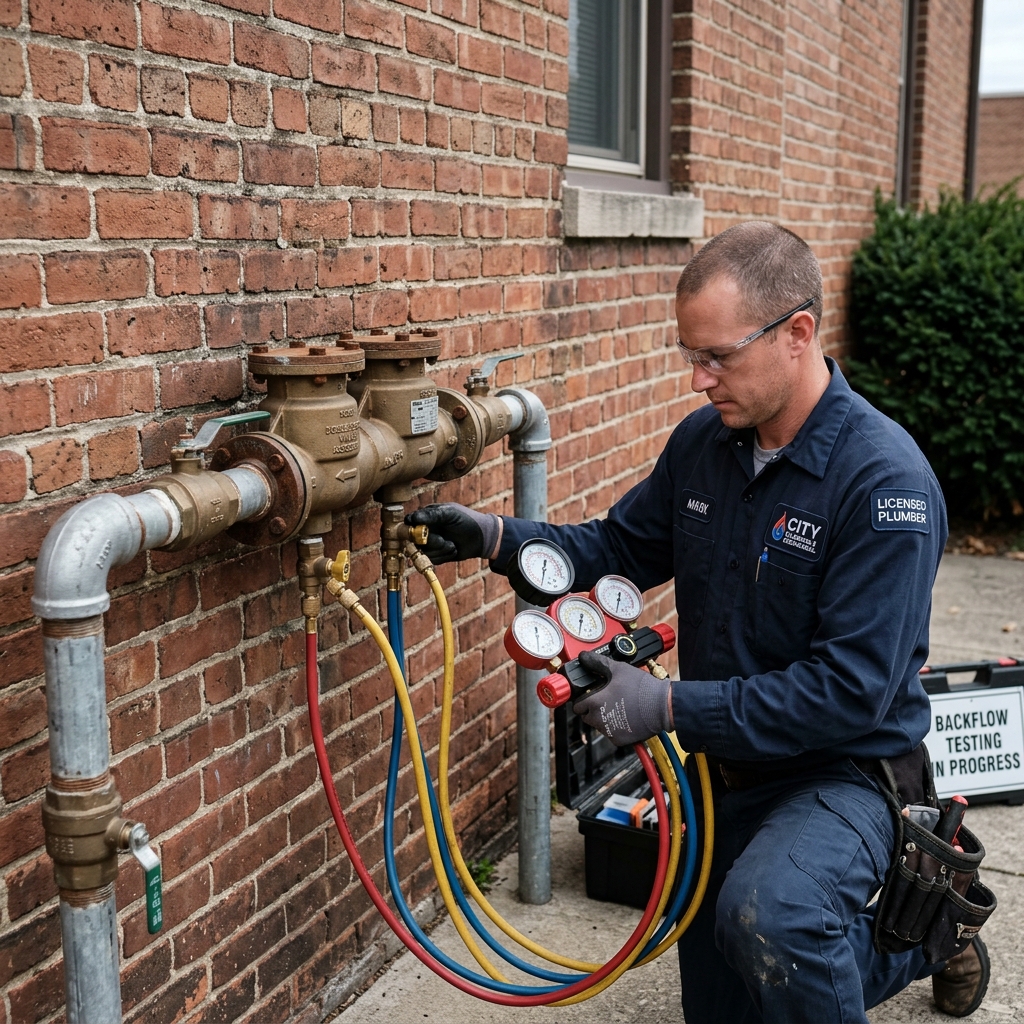 A licensed plumber using a backflow test kit with pressure gauges connected to test cocks on a double check valve assembly mounted near a building wall
What to Do Right Now
If any of the signs above sound familiar, here's your action plan:
Schedule a test. Find a certified backflow tester in your area and get the device tested. This gives you hard data on what's actually happening inside the assembly. On FindBackflowTesters.com, you can search by zip code to find certified testers near you.
Check your test history. If you've been getting annual tests (as required), look at the trend. Gradually declining performance across multiple tests tells a different story than a single sudden failure.
Get a repair estimate before committing to replacement. A good tester or plumber will tell you honestly whether a rebuild is worth doing. If they recommend replacement, ask why — and make sure the reasoning lines up with what you're seeing.
Don't ignore it. A failed or failing backflow preventer isn't just a code violation. It's a genuine public health risk. Most jurisdictions can shut off your water service for non-compliance, and liability exposure from a backflow contamination event can be significant for commercial property owners.
Keep records. Save your test reports, repair invoices, and any correspondence with your water utility. These records protect you during inspections and demonstrate due diligence if questions ever arise.
Prevention Is Cheaper Than Emergency Repair
The single best thing you can do for your backflow preventer is keep up with annual testing. A certified tester catches small problems — a seal starting to wear, a spring losing tension — before they cascade into full device failure. Most rebuilds cost a fraction of what emergency replacement runs, especially when you factor in potential fines and water service interruption.
If your property has a backflow preventer and you're not sure when it was last tested, that's your sign. Pick up the phone or search for a tester today. The device protecting your water supply deserves at least fifteen minutes of professional attention once a year.