How Long Does a Backflow Preventer Last Before Needing Replacement?
How Long Does a Backflow Preventer Last?
If you own or manage a property with a backflow preventer, one of the most practical questions you can ask is: how long does a backflow preventer last before it needs to be replaced? The honest answer is that it depends — on the type of device, the quality of your water, how well the assembly has been maintained, and the conditions it faces year after year.
There is no single federal expiration date for backflow preventers. The U.S. EPA sets the framework for safe drinking water through the Safe Drinking Water Act, and state and local water authorities establish cross-connection control programs, but none of them stamp a universal "replace by" date on these devices. What matters most is whether the assembly continues to pass its annual test and protect the water supply.
That said, backflow preventers are mechanical assemblies with internal parts that wear out over time. Understanding realistic lifespan ranges — and what can shorten or extend them — helps you plan ahead and avoid surprises.
Common Lifespan Ranges by Device Type
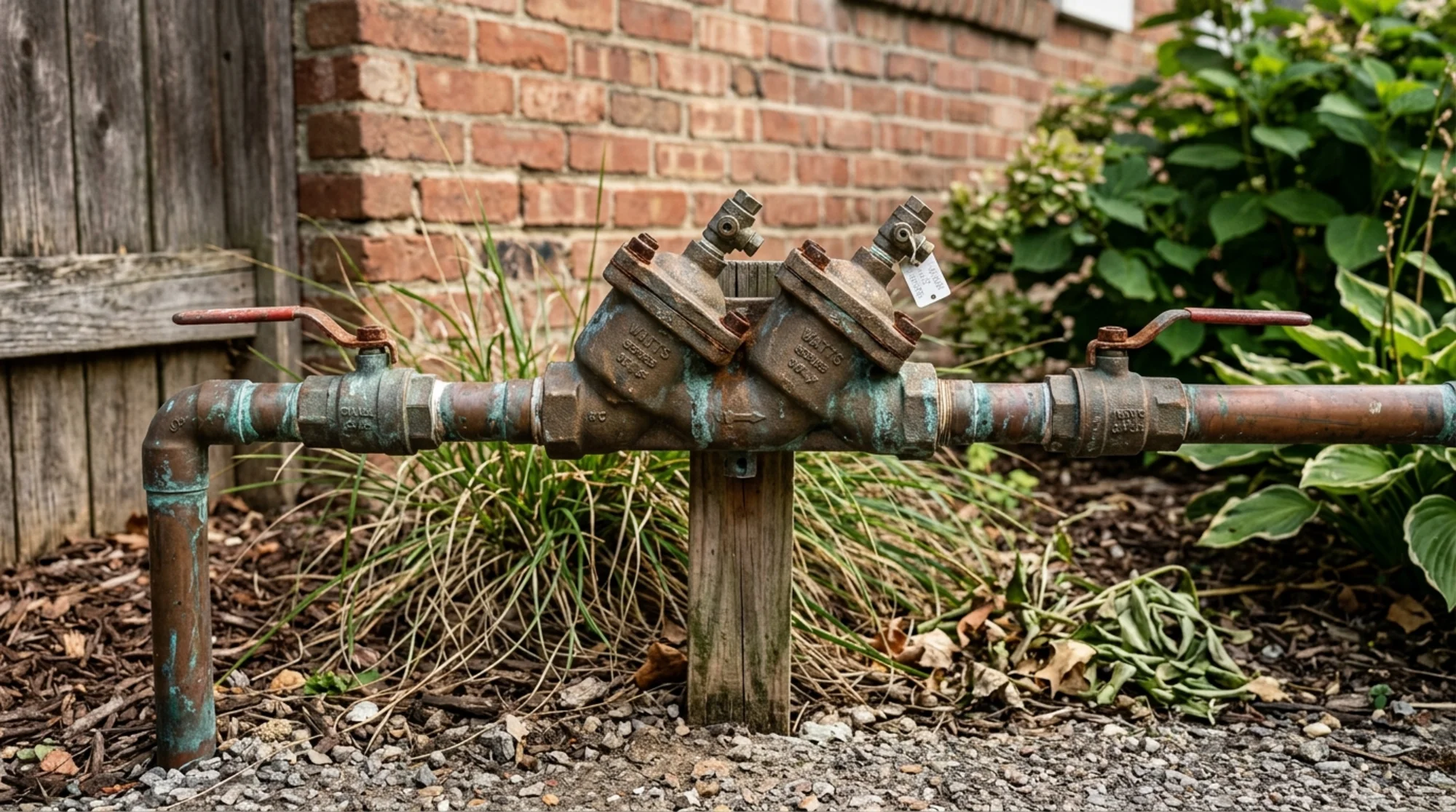
Outdoor backflow prevention assembly on a residential or light commercial service line with visible aging but intact components
No two installations age exactly the same way, but here are the ranges that certified testers and plumbers commonly see in the field:
- Reduced Pressure Zone (RPZ) assemblies often last between 15 and 30 years in favorable conditions, though individual internal components like check valves, relief valve seats, and springs may need rebuilding well before the full assembly reaches end of life.
- Double Check Valve Assemblies (DCVAs) can have a similar overall lifespan, sometimes longer, because they have fewer moving parts than an RPZ. However, they are still subject to wear, sediment buildup, and corrosion.
- Pressure Vacuum Breakers (PVBs) are simpler devices commonly used on irrigation lines. Many PVBs last 10 to 20 years, though exposure to freezing temperatures and UV can shorten that range significantly.
- Atmospheric Vacuum Breakers (AVBs) are the simplest type and are typically the least expensive to replace. Their lifespan varies widely — some last many years with minimal issues, while others degrade quickly depending on installation and water conditions.
These are general ranges, not guarantees. A well-maintained RPZ in a mild climate with clean municipal water can easily outlast a neglected one in an area with hard water and harsh winters.
What Affects How Long a Backflow Preventer Lasts
Several factors influence the actual working life of any backflow prevention assembly:
Water quality. Hard water, high mineral content, sediment, and chlorine levels all accelerate wear on internal rubber components, springs, and valve seats. Properties with aggressive water chemistry often see shorter intervals between rebuilds.
Climate and exposure. Assemblies installed outdoors in regions with freezing winters face thermal stress that can crack bodies, damage seals, and warp internal parts. Freeze damage is one of the most common reasons for early replacement. Even in warmer climates, direct sun exposure and heat cycling take a toll over time. If you've dealt with leaking after cold weather, freeze damage may already be shortening your device's remaining life.
Maintenance history. Assemblies that receive regular annual testing and timely repairs when components show wear tend to last significantly longer than those that are neglected until they fail. Annual testing isn't just a regulatory requirement — it's the single best tool for catching problems early. You can learn more about why backflow testing is required and how it protects both your property and public health.
Installation conditions. Proper installation matters more than many owners realize. An assembly installed without adequate drainage, without sufficient clearance for maintenance, or in a location prone to flooding or vehicle traffic may have a shorter useful life regardless of the device quality. Our guide on backflow preventer installation requirements covers what good installation looks like.
Device quality and manufacturer. Not all assemblies are built to the same standard. Well-known manufacturers with established track records and readily available replacement parts tend to produce devices that last longer and are easier to maintain over time.
Annual Testing and Condition Matter More Than Age Alone
It can be tempting to assume that a backflow preventer that's 20 years old is automatically due for replacement, or that a 5-year-old device is fine no matter what. Neither assumption is reliable.
What actually determines whether a device should stay in service is its condition — specifically, whether it can pass its annual test and function as designed. A 25-year-old RPZ that passes testing with strong readings every year and has had components rebuilt on schedule may be in better shape than a 10-year-old unit that has been neglected.
Annual testing by a certified tester is the most reliable way to know where your assembly stands. Testers check differential pressures, relief valve operation, and check valve tightness — the measurements that reveal whether internal components are still doing their job. Many common reasons backflow tests fail are repairable, but the pattern of failures over time tells an important story about the assembly's trajectory.
Repair, Rebuild, or Replace: A Decision Framework
 Certified backflow tester inspecting an older RPZ assembly with gauges and maintenance notes
When a backflow preventer starts showing its age, the choice between repair, rebuild, and full replacement isn't always obvious. Here's a practical way to think through it:
Repair makes sense when:
- A single component has failed (a check valve, spring, or rubber kit) and the rest of the assembly is in good condition
- Replacement parts are readily available for your make and model
- The assembly body shows no significant corrosion, cracks, or structural damage
- The device has a reasonable history of passing tests after prior repairs
Rebuild is worth considering when:
- Multiple internal components need attention at the same time
- The assembly has reached a point where individual repairs are becoming frequent
- The body and external hardware are still structurally sound
- A full rebuild kit from the manufacturer is available and cost-effective compared to replacement
Replacement is the better path when:
- The assembly body is cracked, corroded through, or physically damaged
- Freeze damage has compromised the casting or housing
- Replacement parts are no longer manufactured or are difficult to source
- The assembly has failed multiple consecutive tests despite repairs
- Chronic leaking continues after repair attempts
- Your water utility or local program requires an upgrade to a different device type or standard — some programs, like the Austin Water backflow testing program, may require specific assemblies or configurations as part of compliance updates
- The cost of another rebuild approaches or exceeds the cost of a new assembly with a warranty
For a deeper comparison of repair versus replacement considerations, see our detailed guide on whether to replace or repair your backflow preventer.
Signs Replacement May Be Near
Even if your backflow preventer is still technically passing its annual test, certain warning signs suggest replacement is on the horizon:
- Repeated test failures — if the assembly fails, gets repaired, and fails again within a short period, the underlying problem may be beyond component-level fixes
- Unavailable or obsolete parts — older assemblies from discontinued product lines become increasingly difficult and expensive to maintain
- Visible body damage — cracks in the casting, severe external corrosion, pitting, or deformation of the body are not repairable and compromise the assembly's integrity
- Freeze or impact damage — even if an assembly appears to function after a freeze event, internal damage may not be immediately visible and can worsen over time
- Chronic leaking from the relief valve or body — persistent leaking that returns after repair often indicates worn seats or body erosion that rebuilds cannot fully correct
- Utility or program upgrade requirements — when your local water authority updates its cross-connection control program, you may be required to install a newer or different type of assembly
- Declining test margins — if your tester notes that readings are getting closer to failure thresholds each year, even while still passing, the trend suggests replacement is approaching
What to Ask When Replacement Is Recommended
If a tester or plumber recommends replacing your backflow preventer, it's reasonable to ask questions before committing. A reputable professional will welcome them:
- What specifically is wrong with the current assembly? Ask for details — is it the body, internal components, or both?
- Could a rebuild extend the life of this assembly? If so, for how long, and at what cost compared to replacement?
- Are replacement parts still available for my current device? If parts are obsolete, that alone can justify replacement.
- What type and size of replacement do you recommend, and why? Make sure the recommendation matches your property's actual hazard level and local requirements.
- Does my local water authority require a specific type of assembly? Requirements vary by jurisdiction — what's acceptable in Austin may differ from what's required in Charlotte.
- What's included in the replacement quote? Confirm whether the price covers the assembly, installation, initial testing, and any permits or notifications to the water authority.
- Will the new assembly need to be tested before it goes into service? In most jurisdictions, yes — newly installed assemblies require an initial test by a certified tester.
For more answers to common backflow questions, visit our FAQ page.
Plan Ahead and Stay Informed
The best thing you can do as a property owner is stay current on your annual testing and pay attention to what your tester reports each year. A backflow preventer that is well maintained and regularly tested can serve reliably for many years. When it does reach the end of its useful life, the signs are usually gradual — giving you time to plan rather than react.
If your assembly is aging, if you've been told it failed its last test, or if you simply want a professional opinion on how much life is left, find a certified backflow tester near you through FindBackflowTesters.com to get an honest assessment and keep your water safe.
Sources
This article references guidance and regulations from authoritative sources including:
- U.S. Environmental Protection Agency - Safe Drinking Water Act Overview
- U.S. EPA - Cross-Connection Control Manual
- American Water Works Association - Cross-Connection Control & Backflow Prevention Resources
- Centers for Disease Control and Prevention - Drinking Water Prevention Resources
- Texas Commission on Environmental Quality - Drinking Water Programs
- Philadelphia Water Department - Backflow Prevention Program
Last updated: April 6, 2026