What Commercial Buildings Need to Know About Backflow Prevention
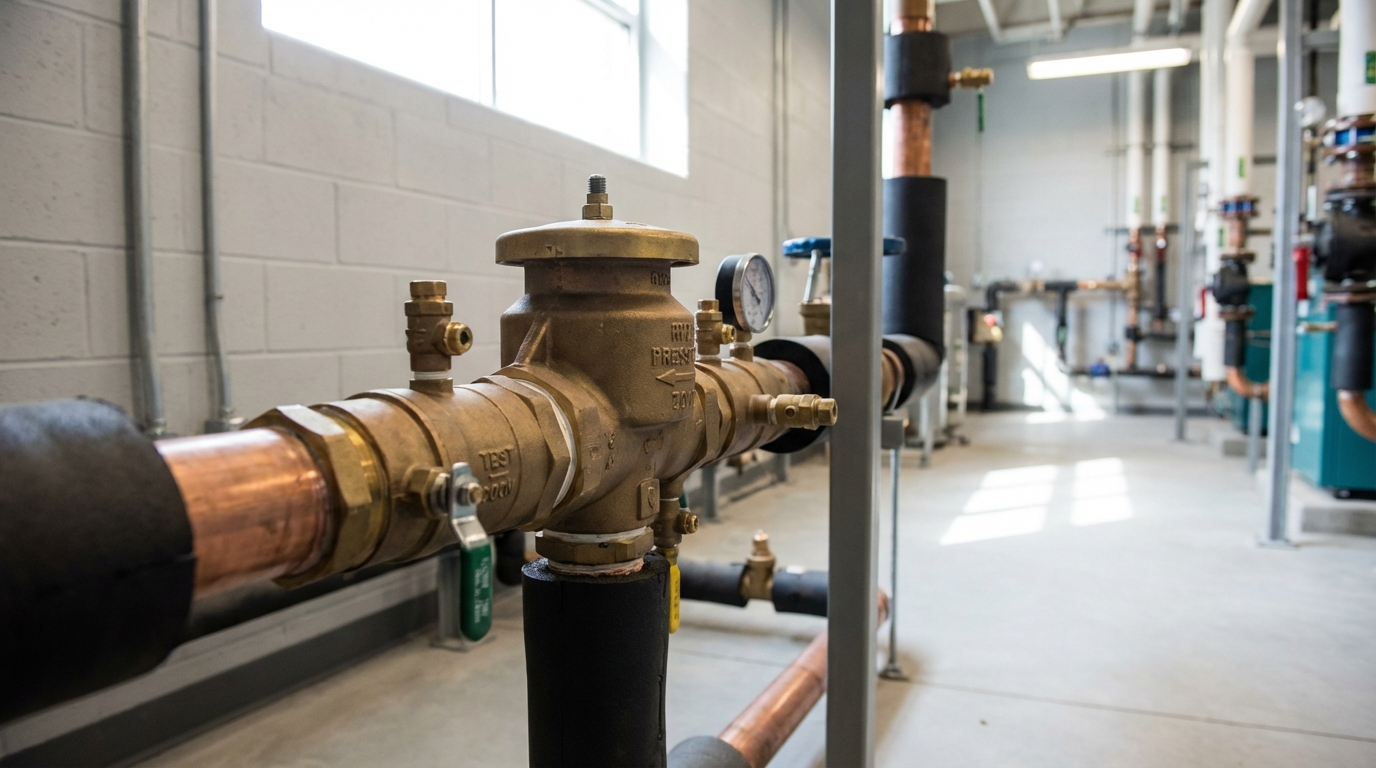
What Commercial Buildings Need to Know About Backflow Prevention in 2026
If you own or manage a commercial property, backflow prevention isn't optional — it's a legal requirement in nearly every jurisdiction across the United States. Yet many building owners discover their obligations only after receiving a violation notice or failing a routine inspection.
Commercial buildings face stricter backflow requirements than residential properties, and for good reason. The volume of water flowing through a commercial system, combined with the chemicals, processes, and equipment commonly found in these buildings, creates a significantly higher risk of contaminating the public water supply.
This guide breaks down exactly what's required, who's responsible, and how to stay compliant without overpaying or scrambling at the last minute.
Why Commercial Buildings Are Held to a Higher Standard
Residential backflow incidents can affect a single household. A commercial backflow event can contaminate water for an entire neighborhood or municipal district.
Commercial properties routinely connect to the public water supply while also housing cross-connection hazards like:
- Boiler systems that operate under high pressure with chemical treatment additives
- Fire suppression systems where stagnant water sits in pipes for months or years
- Irrigation systems pulling from chemically treated landscapes
- Commercial kitchens with submerged inlets, dishwashers, and carbonation systems
- Medical and dental offices using vacuum systems and sterilization equipment
- Laundromats and dry cleaners handling chemical solvents
- Manufacturing facilities with industrial process water
Each of these creates what water authorities call a "cross-connection" — any point where non-potable water or chemicals could flow backward into the clean water supply during a pressure drop or back-siphonage event.
Water utilities classify commercial properties as moderate-to-high hazard by default, which triggers mandatory backflow preventer installation and annual testing requirements.
Which Backflow Preventers Are Required for Commercial Use
Not all backflow devices are created equal. Commercial buildings almost always require one of two types of assemblies, depending on the hazard level:
Reduced Pressure Zone (RPZ) Assemblies — Required for high-hazard applications. RPZ valves provide the strongest protection because they include a relief valve that dumps water rather than allowing contamination to pass through. You'll typically find these mandated for:
- Chemical processing connections
- Fire sprinkler systems with chemical additives
- Boiler feeds
- Medical facilities
- Any connection where toxic substances could enter the supply
Double Check Valve Assemblies (DCVA) — Used for moderate-hazard situations where the contaminant is non-health-threatening. Common applications include:
- Fire sprinkler systems without additives
- Irrigation systems without chemical injection
- HVAC makeup water lines
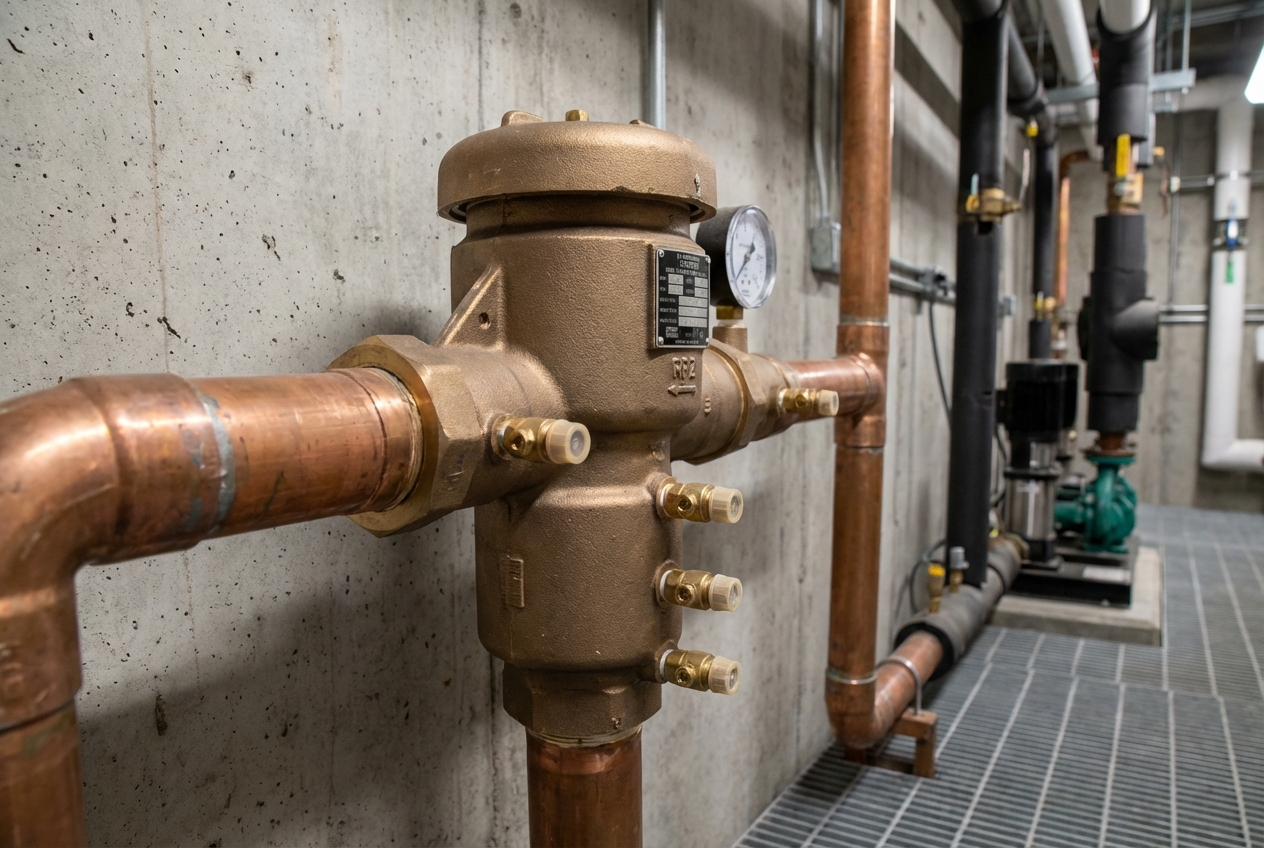 RPZ backflow preventer assembly installed in a commercial building mechanical room with copper piping and test cocks visible
Simple atmospheric vacuum breakers and hose bibb vacuum breakers — the devices you might find on a residential spigot — are generally insufficient for commercial applications. Some jurisdictions accept pressure vacuum breakers (PVBs) for specific commercial irrigation setups, but most commercial connections require the testable, higher-grade assemblies listed above.
Your local water purveyor's cross-connection control program dictates exactly which device you need at each connection point. This isn't a situation where you pick what seems reasonable — the utility tells you what's required based on their hazard assessment of your property.
Annual Testing: The Requirement Most Businesses Fumble
Installing the right backflow preventer is only half the equation. Every testable backflow assembly on a commercial property must be tested annually by a certified backflow tester. In some jurisdictions, certain high-hazard devices require testing twice per year.
Here's what happens during a standard commercial backflow test:
- The certified tester connects a differential pressure gauge to the test cocks on the assembly
- They measure the pressure differential across each check valve and the relief valve (for RPZ devices)
- They verify that each component opens and closes within the manufacturer's specifications
- They complete a standardized test report documenting pass or fail results for each component
- The report is filed with your water utility or local health authority
A passing test confirms the assembly will prevent backflow under real-world conditions. A failing test means one or more internal components need repair or replacement before the device can protect the water supply.
What a failed test means for your business: Most jurisdictions give you 30 to 90 days to repair and retest a failed assembly. If you ignore the notice, your water utility can — and will — shut off water service to the property. This isn't a theoretical threat. Water authorities across the country disconnect commercial properties every year for non-compliance.
Who Is Responsible: Owner, Tenant, or Property Manager?
This is where commercial backflow compliance gets complicated. The water utility holds the account holder responsible for compliance. In most cases, that's the property owner.
However, the practical reality in multi-tenant commercial buildings looks like this:
- Building owner is ultimately responsible for the main backflow preventer at the meter and for any building-wide fire suppression backflow devices
- Tenants may be responsible for backflow devices specific to their leased space, especially if their use creates the hazard (a restaurant tenant's kitchen connections, for example)
- Property managers often coordinate testing and repairs on behalf of the owner but don't bear the legal liability unless the management contract specifically assigns it
The smartest approach is to spell this out explicitly in lease agreements. State which party is responsible for maintaining and testing each backflow assembly, who pays for repairs, and who coordinates with the water utility.
If you manage a commercial property and you're not sure which assemblies exist on site, start with a cross-connection survey. A certified backflow tester or your water utility can walk the property and identify every point that needs protection.
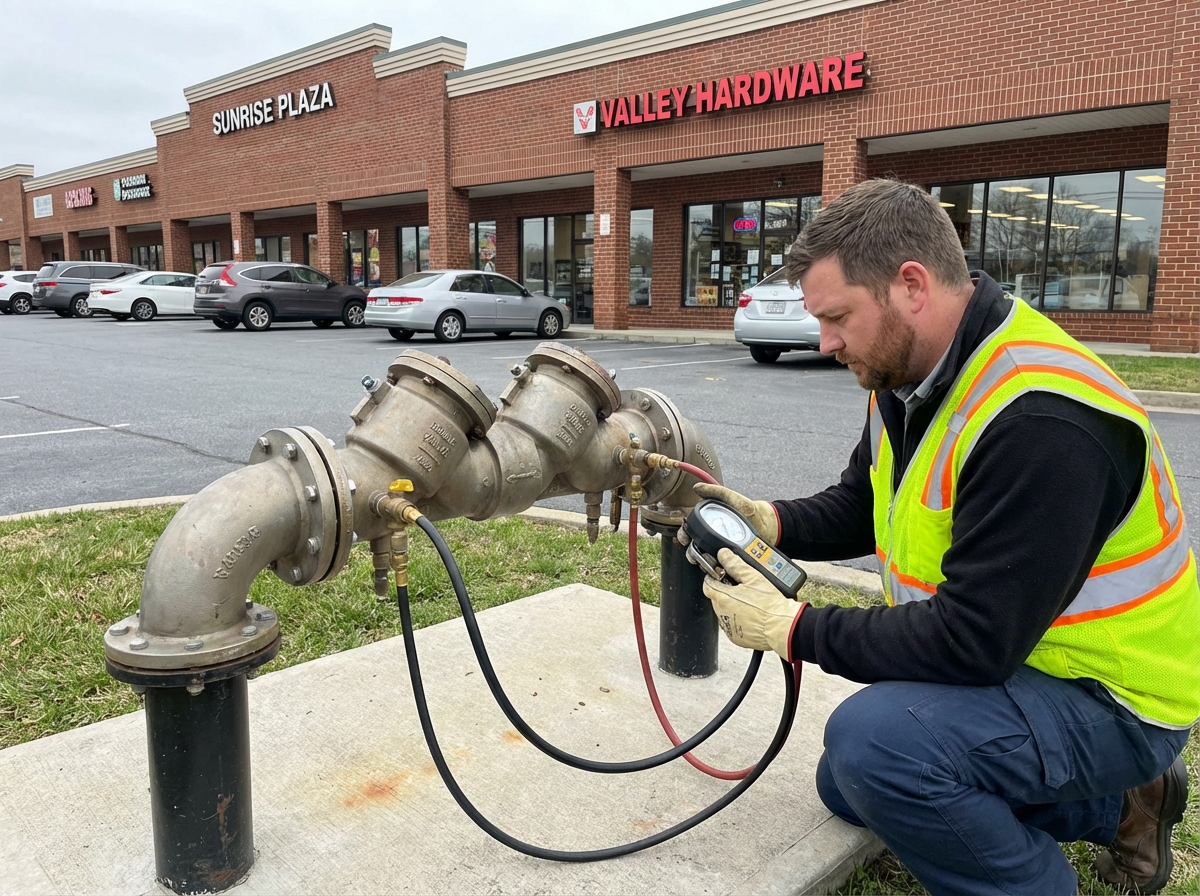 Certified backflow tester using a differential pressure gauge to test a double check valve assembly outside a commercial strip mall
Common Compliance Mistakes That Cost Commercial Owners Money
After working with commercial properties for years, the same mistakes come up repeatedly:
Ignoring the initial hazard assessment letter. When a water utility sends you a notice that your property needs a backflow survey or device installation, that letter starts a compliance clock. Ignoring it doesn't make it go away — it triggers escalation.
Installing the wrong device. A property owner who installs a DCVA where the utility requires an RPZ will fail the compliance review and have to replace the device entirely. The cost of the original installation is wasted.
Skipping annual tests. Even if your assembly is working perfectly, an untested device is a non-compliant device. Utilities don't care that it "probably works" — they need the certified test report on file.
Not tracking multiple assemblies. A commercial building can easily have five to fifteen separate backflow assemblies — the main meter, fire lines, irrigation, boiler feed, each tenant's hazard connections. Losing track of even one creates a compliance gap.
Waiting until the deadline. Certified backflow testers get slammed during peak testing season, which typically runs from March through June when most annual test deadlines hit. Scheduling early — even months ahead — gives you better availability and avoids rush fees.
Hiring uncertified testers. A backflow test performed by someone who doesn't hold a current certification from your state or water utility is invalid. The utility will reject the report and you'll need to pay for retesting.
What Commercial Backflow Compliance Costs
Pricing varies by region, but here are realistic ranges for commercial backflow services in 2026:
| Service | Typical Cost Range |
|---|---|
| Cross-connection survey | $150 – $500 depending on property size |
| RPZ assembly installation | $1,500 – $5,000+ depending on pipe size and location |
| DCVA installation | $800 – $3,000 depending on pipe size |
| Annual backflow test (per device) | $75 – $200 |
| Failed assembly repair | $150 – $800 depending on parts needed |
| RPZ relief valve replacement | $200 – $600 |
For a mid-sized commercial building with six backflow assemblies, expect to budget roughly $600 to $1,200 annually for testing alone, plus any repairs for failed devices.
The cost of non-compliance is far higher. Water disconnection means business interruption, potential health department involvement, fines ranging from $100 to $1,000 per day in some municipalities, and the expense of emergency remediation to get service restored.
New Construction vs. Existing Buildings
New commercial construction has it easier in one respect: backflow requirements are built into the permitting process. Your plumbing engineer specifies the required assemblies, the inspector verifies installation, and the initial test happens before you receive your certificate of occupancy.
Existing buildings face a different challenge. Many older commercial properties were built before cross-connection control programs became widespread. If your building predates your local program, you may receive a retrofit notice requiring you to install backflow protection that wasn't originally part of the plumbing design.
Retrofitting can be expensive and disruptive, especially for RPZ assemblies on larger pipe sizes. RPZ devices also require adequate drainage because they discharge water during normal operation and during testing. In a mechanical room that wasn't designed for this, adding drainage can be a significant project.
Plan ahead. If you receive a retrofit notice, get quotes from multiple licensed plumbers who specialize in backflow installation, and consult with a certified tester about the specific devices your utility requires before committing to any installation.
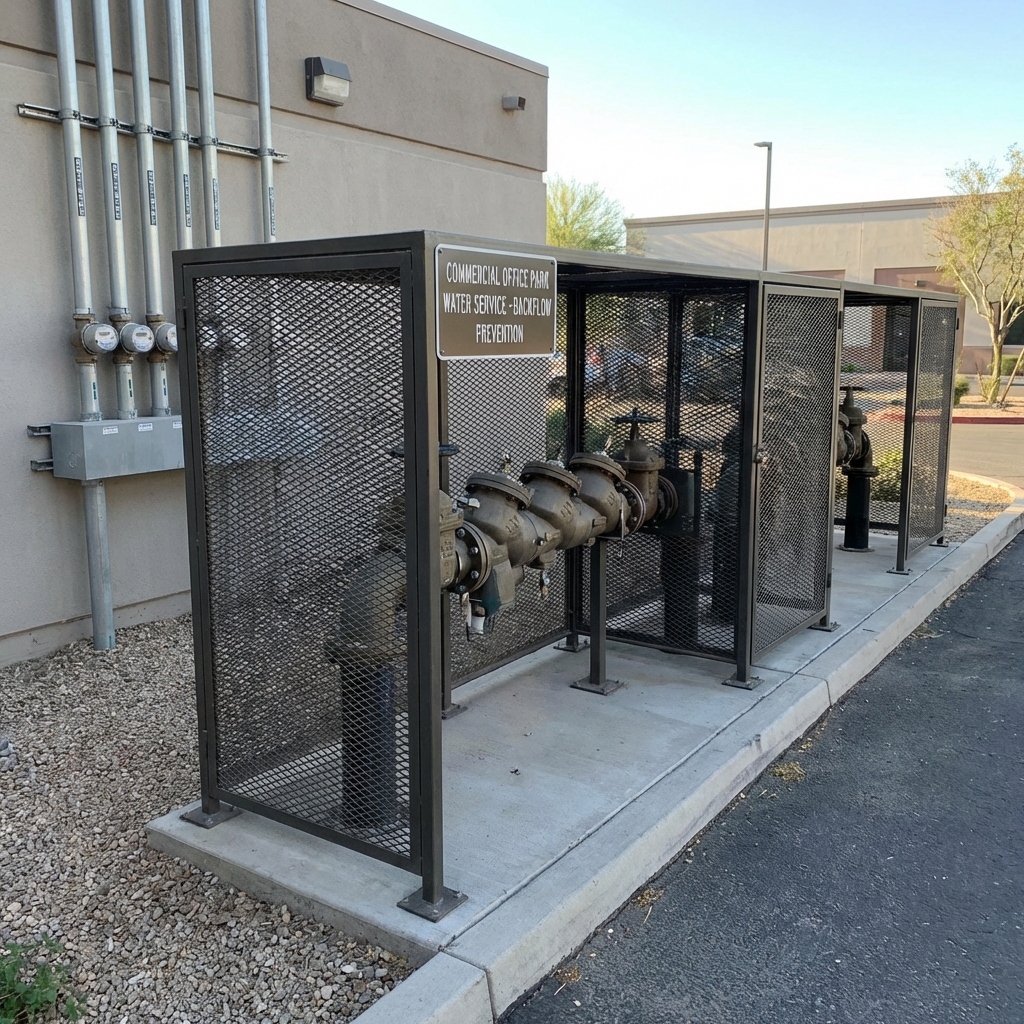 Row of large RPZ backflow assemblies with protective cages installed at the water meter bank of a multi-tenant commercial office park
How to Stay on Top of Commercial Backflow Compliance
The commercial property owners who never deal with violations follow a simple system:
Maintain an inventory. Keep a spreadsheet or property management record listing every backflow assembly on the property — device type, manufacturer, serial number, location, pipe size, and the date of the last test.
Schedule testing proactively. Don't wait for the utility's reminder letter. Set a recurring calendar event 60 to 90 days before your annual deadline and book your certified tester early.
Keep records for at least five years. Utilities can audit your compliance history. Having organized records of every test, repair, and replacement protects you during audits.
Build a relationship with a certified tester. A tester who knows your property and your assemblies can flag aging components before they fail, suggest cost-effective repair strategies, and handle your utility paperwork reliably.
Review lease language. Make sure your lease agreements clearly assign backflow maintenance and testing responsibilities. Ambiguity in this area leads to missed tests and finger-pointing after violations.
Next Steps for Commercial Property Owners
If you're not sure where your property stands on backflow compliance, here's what to do this week:
- Call your water utility's cross-connection control department. Ask them what devices are on file for your address and whether any tests are overdue.
- Walk your mechanical rooms. Physically locate every backflow assembly on the property. If you can't identify them, hire a certified tester for a survey.
- Check your tester's certification. Verify that the person testing your assemblies holds a current, valid certification recognized by your local authority.
- Schedule any overdue tests immediately. If you're behind, getting compliant now is always cheaper than dealing with enforcement.
Commercial backflow compliance isn't glamorous, but it's straightforward once you have the right devices installed and a reliable testing schedule in place. The businesses that treat it as routine maintenance — not an emergency — spend less money and never lose sleep over water shutoff threats.
Need a certified backflow tester for your commercial property? FindBackflowTesters.com connects you with qualified professionals in your area who handle commercial testing, installation, and repairs.