Backflow Testing for New Construction: What Builders Need to Know
Backflow Testing for New Construction: What Builders Need to Know
Backflow problems on new construction projects usually start well before anyone schedules the first annual test.
They start when the site plan treats water service, irrigation, fire protection, boilers, chemical feed, reclaimed water, or private auxiliary water as separate scopes instead of one cross-connection problem. By the time a builder is chasing final inspections, those small coordination gaps can turn into rework, permit delays, or a device installation that the local program will not accept.
The good news is that the core logic is not mysterious. Florida DEP defines a cross-connection as any temporary or permanent connection between potable water and a nonpotable source or other substance, and explains that backflow is the undesirable reversal of flow through that connection into the public water system or a potable system. In plain English, if a new building creates a path for contaminated or nonpotable water to move backward, the utility is going to care.
That is why builders should think about backflow protection as part of construction planning, not as a last-week paperwork item. If you want the broad public-health context first, our guide to why backflow testing is required is a good companion. If you are already sourcing help, you can also find a backflow tester near you.
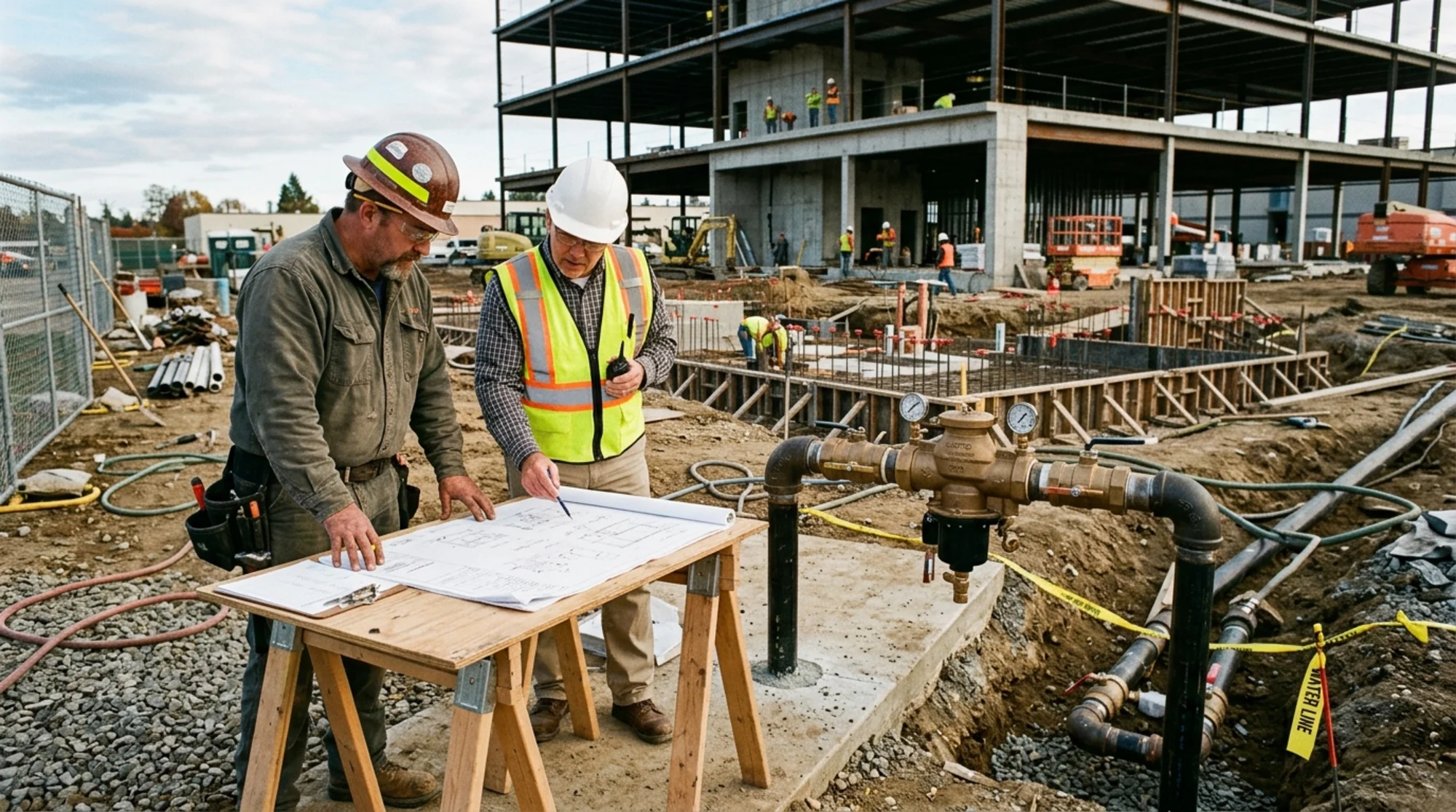
A commercial construction site with a newly installed backflow assembly near the water service line, licensed plumber and site superintendent reviewing plans, natural daylight, realistic jobsite details, no logos or text overlay
Why new construction gets flagged early
Utilities do not wait until a building is occupied to care about cross-connection risk. They care as soon as the project design shows conditions that could threaten the potable water supply.
Florida DEP says water suppliers should ensure that a proper backflow preventer is installed and maintained at the service connection to systems or premises that pose a significant hazard. Its examples include dedicated fire protection systems, irrigation piping systems, premises with auxiliary or reclaimed water systems, industrial or medical facilities, and tall buildings.
That list overlaps with common new construction scopes. A builder might not think of a fire line, irrigation sleeve, boiler room, or makeup-water connection as a “backflow project,” but the utility often does. Philadelphia Water Department’s compliance page also makes the construction link explicit by publishing a backflow assembly installation permit application and a city-approved list of assemblies and technicians. That is a useful reminder that local programs may want device approval and installation paperwork before closeout, not after.
The design-stage questions that save the most pain
The fastest way to create expensive rework is to install a device before anyone confirms whether it is the right assembly, in the right location, for the right hazard.
Portland Water Bureau says the location of the assembly, service size, and hazard level of the connection determine which backflow assembly should be used. That is a practical rule for builders because it means device selection is not just a plumbing-material choice. It is a coordination choice involving site utility layout, finish grade, drainage, enclosure or vault design, and the actual use of water inside the building.
Before procurement, builders should be able to answer a few basic questions:
- Will the site have irrigation tied to potable water?
- Is there a dedicated fire service, and if so, what protection does the utility require at the connection?
- Will the project use boilers, cooling equipment, chemical treatment, medical equipment, process water, or other high-hazard uses?
- Is there reclaimed water, a private well, a tank, or another auxiliary water source anywhere on the site?
- Does the local utility require a specific approved-assembly list, permit form, or tester credential?
If those questions are answered early, the backflow requirement becomes manageable. If they are answered at punch-list time, the device often ends up being the thing everyone blames for a schedule problem that really started in design coordination.
The project conditions that most often change the answer
There is no single national “new construction device.” The right answer usually changes when one of these conditions appears.
Irrigation and site water features
Irrigation systems are one of the most common triggers. Florida DEP specifically lists irrigation piping systems among the connections that generally warrant protection at the service connection. That matters on office campuses, retail pads, schools, apartment sites, and hospitality projects where landscape irrigation gets designed late and connected to the same potable service.
For builders working across multiple markets, city pages like Austin, TX and Charlotte, NC can help you start finding local testing and compliance expectations once the job location is known.
Fire protection and dedicated services
Fire systems introduce their own cross-connection questions, especially when there are booster pumps, stagnant fire-line water, additives, or combined domestic and fire layouts. Portland’s commercial-assembly guidance shows why utilities often distinguish between double-check and reduced-pressure configurations based on hazard and application. Builders should not assume the fire contractor, plumber, and civil team are all working from the same utility expectation unless someone has actually checked.
High-hazard occupancies inside the building
Medical, laboratory, industrial, food-processing, and certain commercial occupancies may trigger stronger protection because of the substances or equipment connected to the water system. Florida DEP explicitly calls out industrial, medical, laboratory, marine, and other facilities where objectionable substances are handled in a way that could cause contamination of the public water system.
That is why a shell building can look simple on paper and still end up with a higher-hazard backflow requirement once the tenant improvement or operational use is understood.
Auxiliary water, wells, and mixed-water sites
Some new projects, especially on larger campuses or rural-edge developments, combine public potable water with another source such as a well, storage tank, reclaimed water, or process-water system. CDC notes that private well water is not regulated, treated, or monitored by public officials and recommends testing private well water at least once each year. That public-health point is separate from utility enforcement, but it reinforces the same design lesson: when a project has more than one water source, separation and cross-connection planning need to be explicit.
 Realistic construction meeting beside irrigation and fire service piping with engineers reviewing utility plans and a visible backflow assembly installation location, documentary style, natural light, no text overlay
What builders should line up before rough-in is complete
A smooth project usually has four backflow items settled before the team gets too far into finish work.
1. Utility or authority expectations
Confirm whether the local program requires plan review, a specific permit application, or an approved-assembly list. Philadelphia’s backflow page is a strong example of how some cities publish all three. Your local program page may also specify tester registration requirements, report forms, or accepted certifications.
If you want a local example from our directory, see Austin Water backflow testing requirements or browse all utility programs.
2. Assembly type and installation details
The team should know not just the device type, but also the required install conditions. Portland notes, for example, that reduced-pressure assemblies need appropriate drainage because they can discharge water during normal operation or when something is wrong. That affects room layout, drain planning, and outdoor placement decisions.
3. Approved tester or startup workflow
Even on new construction, the closeout path matters. Philadelphia publishes city-certified technician resources, and Seattle requires annual testing by a certified Backflow Assembly Tester with reports completed according to state and utility requirements. Builders should know early who will test the device, what credentials they need, and who is responsible for filing the report.
4. Owner turnover records
Backflow compliance should be part of the turnover package, not tribal knowledge. The owner should receive the assembly type, location, serial details if available, installation date, permit or approval paperwork, the initial test report, and the next expected testing responsibility. If that handoff is weak, the first compliance miss often happens within the first year.
A builder-friendly closeout checklist
Before calling the job truly done, verify these items:
- the installed assembly matches the approved use and hazard level,
- the location still satisfies clearance, grade, and drainage requirements after field changes,
- any required permit or installation paperwork has been submitted,
- the project used an accepted tester or technician where the local program requires one,
- the test report is complete and filed with the right utility or authority,
- and the owner has copies of the records for future annual testing.
That last step matters because utilities like Seattle make clear that annual testing is how they ensure an assembly is still functioning properly. A new building is not “set for life” just because the assembly passed once.
For owners who will inherit the site, our FAQs and learn center are useful next reads, especially if they are new to annual testing cycles.
 Realistic close-up of organized project turnover documents including backflow test report, approved assembly paperwork, and as-built plans on a construction trailer desk, natural lighting, no logos or text overlay
Bottom line
Backflow testing for new construction is really a coordination issue disguised as a plumbing detail.
When builders treat irrigation, fire protection, auxiliary water, and interior hazard uses as isolated scopes, backflow requirements show up late and expensively. When the team confirms the local program, picks the right assembly for the hazard, installs it in the right conditions, and plans the testing and paperwork path early, the project usually moves much more cleanly.
The safe play is simple: ask the backflow questions during design and rough-in, not after final finishes are complete.
Sources
This article references guidance and regulations from authoritative sources including:
- U.S. Environmental Protection Agency (EPA) - Cross-Connection Control: A Best Practices Guide
- American Water Works Association (AWWA) - Cross-Connection Control / Backflow Prevention resources
- Florida Department of Environmental Protection - Cross Connection Control and Backflow Prevention Program
- Philadelphia Water Department - Cross-Connection & Backflow Compliance
- Portland Water Bureau - How to choose and install a backflow prevention assembly
- Seattle Public Utilities - Backflow Assembly Testing
- Centers for Disease Control and Prevention (CDC) - Preventing Drinking Water-Related Illnesses
Last updated: May 4, 2026