Backflow Preventer Winterization: How to Protect Your Assembly from Freezing
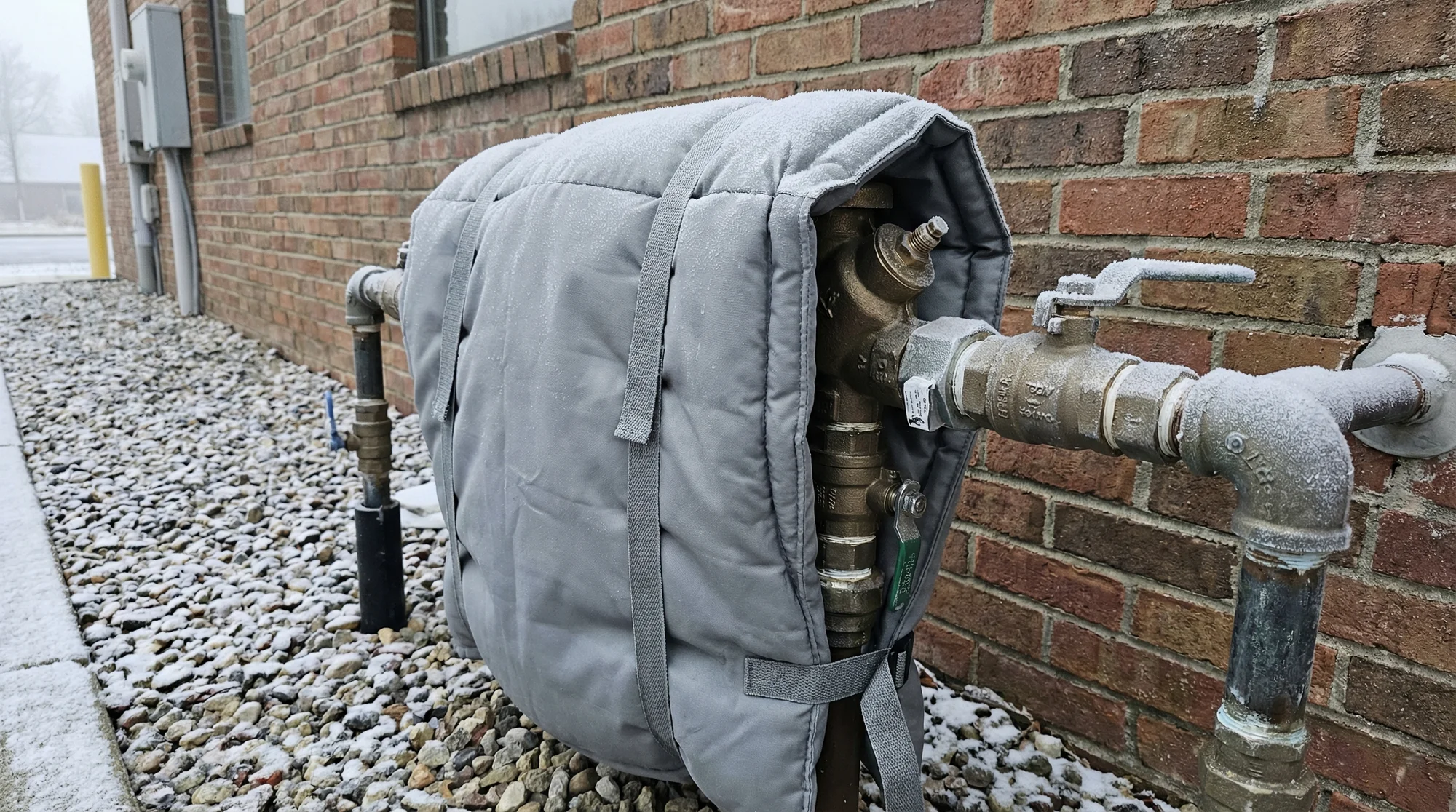
Cold weather can crack backflow preventers, damage valves, and create compliance headaches. Whether you own a home with a single irrigation assembly or manage a commercial property with multiple installations, understanding how to winterize properly can save you from expensive repairs and failed tests.
This guide covers what freezing does to a backflow assembly, what you can do yourself, what needs a professional, and where owners commonly go wrong.
Why Freezing Is Dangerous for Backflow Assemblies
Backflow prevention assemblies are designed to protect the public water supply by keeping contaminated water from flowing backward into the distribution system. Most assemblies installed outdoors or in unheated spaces contain water-filled chambers, springs, check valves, and rubber seals. When that trapped water freezes, it expands.
The consequences can include:
- Cracked bronze or stainless steel bodies. Even small cracks can cause persistent leaks and render the assembly unable to pass its annual test. In some cases, a cracked body means the entire unit needs to be replaced.
- Damaged shutoff valves. Gate valves and ball valves upstream and downstream of the assembly can split or seize when frozen. A shutoff valve that no longer holds means you cannot isolate the assembly for testing or maintenance.
- Broken or bent test cocks. The small quarter-turn valves used during annual testing are especially vulnerable. If a test cock breaks off or leaks, the assembly cannot be tested until it is repaired.
- Hidden internal damage. Freeze damage does not always show on the outside. Check valve seats, springs, disc holders, and rubber seals inside the assembly can deform or crack without any visible sign. The assembly may appear fine but fail its next annual test, or worse, fail to prevent backflow when it matters.
Understanding what causes a backflow preventer to leak can help you distinguish freeze-related damage from other issues. And if the damage is significant, you may need to weigh whether it makes more sense to repair or replace the assembly.
An insulated enclosure and protected exposed piping can reduce freeze risk, but the correct setup depends on the assembly and whether it must stay in service.
The Right Winterization Approach Depends on Your Situation
There is no single correct way to winterize a backflow preventer. The right approach depends on the type of assembly you have, how and where it is installed, whether the line it protects is used year-round, and the requirements of your local water utility or backflow prevention program.
For example:
- Irrigation-only assemblies that are not needed during winter months are often shut down and drained as part of a full irrigation blowout. This is the most common residential winterization scenario.
- Assemblies protecting a fire sprinkler connection, domestic water service, or commercial process typically cannot be shut down seasonally. These need to remain in service and may require insulation, heat trace, or an enclosure rated for your climate.
- Some local programs have specific guidance on winterization or seasonal shutdown procedures, including whether the water utility needs to be notified before an assembly is taken out of service. Programs like the Philadelphia Water Department backflow program and the Austin Water backflow program maintain their own compliance timelines. If you are unsure, contact your water provider before making changes.
The point is that you should not assume every assembly should be drained for winter, and you should not assume every assembly will be fine without protection. Evaluate each installation on your property individually.
What You Can Do Before a Freeze
Many of the most important winterization steps are things a homeowner or property manager can handle without specialized tools. Here is a practical checklist:
Pre-Freeze Checklist
- Identify every backflow assembly on your property, including irrigation, fire, domestic, and any auxiliary connections. Assemblies in crawl spaces, mechanical rooms, and along exterior walls are all at risk.
- Check for standing water around the assembly. Pooling water near or under the unit increases freeze risk. Clear any drainage obstructions.
- Inspect existing insulation or enclosures. Look for torn or missing pipe insulation, damaged enclosure panels, and any gaps that expose the assembly to wind or precipitation.
- For seasonal irrigation lines: Coordinate a full system blowout with your irrigation contractor. Make sure the backflow assembly is properly drained as part of this process, including opening test cocks to release trapped water after the supply is shut off.
- For assemblies that must stay in service: Confirm that pipe insulation is intact on all exposed piping, including upstream and downstream of the assembly. Consider whether an insulated enclosure or heat trace is needed based on your climate.
- Know where your shutoff valves are and confirm they operate. If you need to shut down a line quickly during a freeze warning, a stuck valve can turn a manageable situation into a burst pipe.
- Review your testing schedule. If your annual test is coming up, getting it done before winter means any existing problems are caught before freeze season makes them worse. Learn more about how often your backflow preventer should be tested.
When to Call a Licensed Professional
Some winterization tasks are straightforward, but others should be handled by a licensed plumber or certified backflow tester:
- Draining or blowing out an assembly that serves a fire protection system or domestic water supply. Improper shutdown of these systems can create serious safety and compliance issues.
- Installing heat trace cable or powered enclosures. Electrical work near water piping should be done by someone qualified, and improper installation can create fire risk or damage the assembly.
- Evaluating an assembly after freeze damage. If your RPZ (reduced pressure zone assembly) or DC (double check assembly) has been through a hard freeze and is leaking, discharging from the relief valve, or showing visible damage, it needs to be evaluated by a certified tester before you rely on it for protection. A visual inspection alone is not enough. The assembly should be tested to confirm that its internal components are still functioning within specification.
- Repairing or replacing freeze-damaged components. Backflow assembly repair requires specific parts, tools, and in many jurisdictions, a licensed plumber or certified specialist.
If you are looking for a certified tester in your area, you can search by location. For example, find testers in Austin, TX or Charlotte, NC, or visit our FAQs for help getting started.
 Before winter, it helps to inspect the assembly, enclosure, shutoff valves, and nearby piping so small problems do not turn into freeze damage.
Common Winterization Mistakes
Even well-intentioned property owners make mistakes that can cause more harm than the cold itself.
Wrapping the assembly in plastic, tarps, or non-breathable material. Covering a backflow assembly with plastic sheeting or a sealed bag can trap moisture inside, which actually accelerates freezing and corrosion. Condensation builds up with no way to escape, and the assembly sits in a damp environment all winter. Use breathable insulation materials designed for outdoor plumbing, not plastic wrap or trash bags.
Blocking inspection and testing access. Some enclosures or insulation setups make it impossible to reach the test cocks or shutoff valves without removing the entire cover. If your water utility or backflow program requires an annual test, the assembly needs to be accessible. An enclosure that has to be demolished every spring is not a practical solution.
Applying direct heat unsafely. When a freeze does happen, some property owners try to thaw a frozen assembly with a propane torch, heat gun, or open flame. This can scorch rubber seals, warp brass and bronze components, and create a fire hazard near dry insulation. If an assembly is frozen, the safest approach is to allow it to thaw gradually or use warm (not boiling) water applied carefully. If the assembly has already cracked, thawing it will just reveal the leak.
Forgetting upstream piping and irrigation lines. Winterizing the backflow assembly itself does no good if the pipe feeding it or the irrigation line downstream is full of water. A frozen pipe upstream of the assembly can burst and flood the area, while a frozen irrigation line can send pressure back into the assembly. The entire run of exposed piping needs protection.
Assuming damage is only cosmetic. A small drip from a test cock or a hairline crack on the body may look minor, but freeze damage often extends deeper than what is visible. Internal check valves, springs, and seals can be compromised without any external indication. This is why backflow testing is required on a regular basis and is especially important after a freeze event.
After the Freeze: What to Watch For
Once temperatures rise again, take a few minutes to inspect each assembly on your property:
- Look for new leaks, drips, or water pooling around the assembly.
- Check whether the relief valve on an RPZ assembly is discharging continuously. Some brief discharge after thawing can be normal, but sustained flow usually indicates internal damage.
- Operate the shutoff valves to confirm they still turn and hold.
- Check for cracks on the body, fittings, and test cocks.
If anything looks wrong, do not ignore it. A damaged backflow assembly is not just a plumbing problem. It is a gap in the protection between your property's water use and the public supply. Have it evaluated and repaired promptly by a qualified professional.
Plan Ahead
Winterization works best when it is not a last-minute scramble. The best time to assess your assemblies and make a plan is in early fall, well before the first freeze warning. If your assembly needs an enclosure, insulation upgrade, or repair, it is much easier to handle that before a cold snap.
A few hours of preparation each fall can prevent costly damage and help keep your property in compliance.
Sources
This article references guidance and regulations from authoritative sources including:
- U.S. EPA Safe Drinking Water Act - Overview of the Safe Drinking Water Act
- U.S. EPA Cross-Connection Control Manual - Cross-Connection Control Manual (PDF)
- CDC Drinking Water Prevention Guidance - Drinking Water Prevention Resources
- AWWA Cross-Connection Control Resources - Cross-Connection Control and Backflow Prevention
- USC Foundation for Cross-Connection Control and Hydraulic Research - FCCCHR Research and Standards
- Philadelphia Water Department - Backflow Prevention Program
- Texas Commission on Environmental Quality - TCEQ Homepage
Last updated: April 5, 2026